
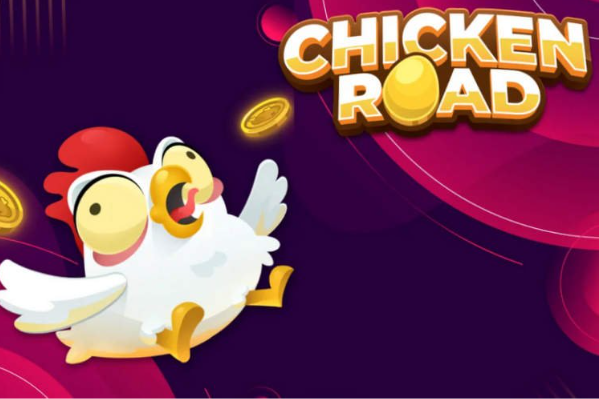
Mobile gaming has taken creativity to new heights, and one of the most engaging and lighthearted titles in recent years is 4Rabet Chicken Road, a fast-paced game where players guide chickens across busy lanes, rivers, and obstacles. While it may seem like a simple arcade-style game, enthusiasts and developers have started asking a fascinating question: what if artificial intelligence could predict the perfect crossing for your chicken? By combining machine learning (ML) with gameplay data, AI could help players anticipate traffic patterns, optimize timing, and improve success rates—transforming the fun, chaotic nature of the game into a strategic challenge.
The concept of AI-driven gameplay is not entirely new, but applying it to a whimsical, physics-based game like Chicken Road opens exciting opportunities. Machine learning algorithms can analyze thousands of in-game movements, obstacle timings, and player behaviors to identify patterns that humans might miss. Imagine a digital assistant guiding your chicken across each lane, calculating the safest path with impressive accuracy while still keeping the game entertaining.
1. Understanding Machine Learning in Gaming
Machine learning is a subset of artificial intelligence that allows systems to learn and improve from experience without being explicitly programmed. In gaming, ML can analyze vast amounts of player data to predict outcomes, adapt difficulty levels, and even create intelligent opponents.
In the context of Chicken Road games, ML can track metrics such as:
- Timing of moving vehicles or obstacles
- Player reaction times
- Success rates on various lanes
- Patterns of repeated crossings
By training an AI model on these datasets, developers can predict the most efficient crossing routes, highlight safe zones, or even simulate expert-level gameplay.
2. How AI Could Predict the Perfect Crossing
The “perfect crossing” in a Chicken Road game depends on both timing and spatial awareness. Here’s how AI could help:
Predicting Vehicle Patterns
Although traffic may appear random, AI can detect subtle patterns. For instance, trucks might always appear after a certain interval, or trains may follow a consistent schedule. By learning these patterns, AI can alert the player when it’s safest to move forward.
Calculating Optimal Speed
AI can adjust for reaction time and lane spacing to determine the exact speed at which the chicken should move, minimizing risk while maximizing efficiency.
Suggesting Alternate Routes
When multiple lanes have simultaneous hazards, ML algorithms can calculate the probability of success for each path, guiding players to the safest or fastest option.
Continuous Improvement
As the AI collects more data from gameplay, it refines its predictions, creating a dynamic system that adapts to changes in traffic patterns or player strategies.
3. Benefits of AI Assistance in Chicken Road
Integrating AI predictions into Chicken Road gameplay could provide multiple advantages:
- Improved Success Rates: Players can make smarter, more informed decisions on crossing timing.
- Learning Tool: New players can understand patterns faster by observing AI suggestions.
- Personalized Gameplay: AI could adapt to different skill levels, ensuring both beginners and experts enjoy the game.
- Enhanced Engagement: Predictive guidance encourages players to experiment with strategies while still feeling challenged.
However, it is important to balance AI assistance so that it enhances the fun without making the game entirely predictable or robotic.
4. Implementing AI in a Mobile Game Environment
While the idea of AI-guided chickens is exciting, there are technical considerations for implementation:
Lightweight Algorithms
Mobile devices have limited computing power compared to PCs. AI models need to be optimized to run smoothly without draining battery life or slowing the game.
Data Privacy
Player data should be anonymized, and any ML model should comply with privacy standards to protect user information.
Real-Time Processing
The AI must process game states in real time, predicting vehicle positions and calculating crossing paths instantly to maintain gameplay fluidity.
User Interface Integration
Players should have a clear visual or audio cue for AI suggestions. Overloading the screen with guidance could reduce the fun factor.
5. Challenges in AI Predictions for Chicken Road
Despite the potential, there are challenges to consider:
- Random Events: Some obstacles may be intentionally randomized to increase difficulty, making prediction less accurate.
- Player Variability: Different players move at different speeds and have unique reaction times, which the AI must account for.
- Over-Reliance on AI: Too much assistance could reduce the skill element of the game, making it less engaging.
- Cheating Risks: If AI predictions are shared externally, it could create unfair advantages among players.
These challenges highlight the importance of balancing AI assistance while maintaining the playful, unpredictable nature of Chicken Road.
6. Future Possibilities: Beyond Basic Predictions
The potential for AI in Chicken Road games goes beyond simply predicting safe crossings:
Dynamic Obstacles
AI could dynamically adjust obstacle placement based on player skill to keep the game challenging.
Multiplayer Strategy
In competitive modes, AI could analyze opponents’ movements and suggest counter-strategies to gain an edge.
Virtual Coaches
Players could use AI-guided “coaches” that provide feedback after each game, offering tips on timing, path selection, and risk management.
Procedural Level Design
Machine learning could generate new levels tailored to individual players, ensuring endless variety and replayability.
7. Ethical Considerations of AI in Gaming
As AI becomes more sophisticated, developers must consider ethical implications:
- Fairness: AI assistance should not give paying players an unfair advantage in competitive modes.
- Transparency: Players should know when AI is influencing their decisions.
- Data Security: Sensitive gameplay data must be handled responsibly.
- Skill Retention: Games should remain enjoyable and challenging even without AI guidance.
By addressing these issues, AI can enhance mobile games without compromising fairness or enjoyment.
8. Conclusion
The concept of AI chickens predicting the perfect crossing in Chicken Road is both entertaining and technically fascinating. By leveraging machine learning, developers can create a smarter, more dynamic gaming experience that guides players through obstacles, enhances engagement, and adapts to individual skill levels. From real-time pattern recognition to personalized coaching, AI opens a world of possibilities for improving performance while keeping the core fun of the game intact.
Ultimately, AI in Chicken Road games represents a future where mobile gaming, strategy, and technology intersect in innovative ways. Whether you’re a casual player, a competitive gamer, or a developer exploring the next evolution of mobile gameplay, machine learning promises to make crossing the road safer, smarter, and more enjoyable than ever.