
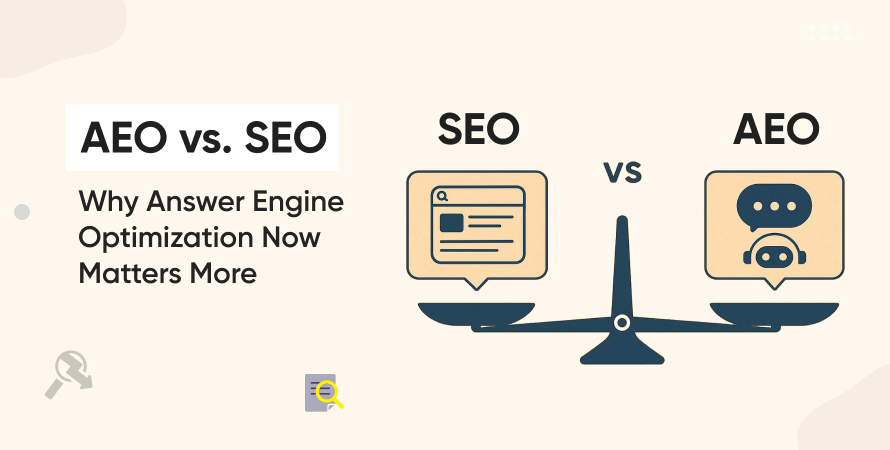
From a list of blue links, search has transformed into an ecosystem of direct answers provided by knowledge panels, widgets, and assistants. In this new environment, answer engine optimization is just as important as traditional SEO. Contemporary content producers need to consider single-answer units—brief, authoritative snippets that feed voice assistants, search result features, and in-app response cards—instead of just optimizing for pages and ranks.
The content lifecycle is altered by this update. The objective shifts from lengthy articles that cover topics in imprecise terms to modular, machine-readable material that swiftly and consistently satisfies exact query intent. Growing voice engagements, mobile micro-moments, and platforms that favor direct responses over clicks are the main drivers of this shift.
In actuality, this entails organizing knowledge such that engines that take in JSON-LD, schema markup, and step-by-step how-to instructions can find it. We’ll go over how to create answerable content, the importance of formats like FAQs and how-to guides, how to improve instrument performance, and how to prepare your material for future developments like search assistants and conversational interfaces in the upcoming parts.
This guide will assist you in shifting your team from page-first thinking to answer-first content design and actionable AEO strategies that you can start using immediately.
Definition of AEO and Its Significance
AEO reinterprets discovery: the frequency with which search engines select your content as the standard response is a measure of success. Providing the distinct facts, procedures, or definitions that engines display in result boxes or read out via assistants is equally as important as having high rankings. This is significant since people are becoming accustomed to instant responses; if the engine returns a satisfactory response, they might not go through to your website. This reality presents publishers with opportunities as well as risks. Opportunity: Being the selected response boosts brand visibility, encourages follow-up activities, and establishes authority; risk: external consumption of material may result in a decrease in brand engagement. Precise content modeling, unambiguous metadata, and an attitude centered on precisely and quickly providing intent are all necessary for AEO.
Content Consumption by Search Assistants
Structured signals are more important to search assistants and answer engines than surface-level language. They extract steps, ingredients, definitions, and numerical information by parsing microdata, schema markup, and predictable patterns. Additionally, they favor succinct canonical responses that are followed by contextual information. As a result, information needs to be constructed with machine parsing in mind. This includes headers that reflect frequently asked questions, lead paragraphs that succinctly respond to them, and supporting parts that elaborate and provide examples or warnings. Algorithms and assistants are more likely to choose your material as the main answer for frequently asked questions if it is well-structured and seems authoritative.
How-To Content’s Function in AEO
It is crucial to comprehend the Importance of how-to content in AEO since structured how-to guides are highly answerable and directly relate to user tasks. Many answer platforms use the HowTo type from schema.org, which follows a step-by-step pattern consisting of an objective, resources, actions, and expected outcome. Assistants can deliver the top steps as a voice script or sample when a page offers a succinct do this sequence. Beyond schema, design each step so that the main action is captured in a single sentence; provide for unambiguous timestamps or multimedia phases; and incorporate troubleshooting comments that foresee frequent errors. In addition to benefiting users, its usability significantly raises the likelihood that it will be recognized as a standard how-to response.
The Reasons FAQs Attract Answers
The reason for the Importance of FAQ in AEO is that they are one-query, one-answer. Frequently asked questions naturally correspond to search queries, and engines can provide complete Q&A pairs in results when they are marked up with FAQ schema. Well-written FAQs are useful because they provide succinct, reliable answers to frequently asked questions, which is precisely what assistants need. An FAQ should avoid using promotional language and have clear, self-contained responses in order to be effective. In order to address the most important intents first, rank your queries according to search logs and customer support statistics. When properly built, FAQs eliminate friction for consumers looking for quick data and produce rich results in real estate.
Content Organization for Machine Use
Divide content into atomic answer units, such as lists, tables, steps, and definitions, so that machines can slice and display them to win AEO. Label entities and relationships using JSON-LD, include explicit Q&A blocks, and use semantic titles that resemble inquiries. To make it easier for parsers to identify the canonical answers, standardize date and numeric forms, and place them close to the top of the page. Human readability is also enhanced by this method: users who scan a page will quickly find the answers, and machines can extract and reuse those same snippets for various interfaces.
Schema Markup: The Answers’ Plumbing
For material that is answer-oriented, schema markup is required. Search engines are given clear instructions on how to understand your content when you use the relevant schema types, such as HowTo, FAQPage, Recipe, or Question. Fill in the following fields in addition to the tag itself: question and acceptedAnswer for FAQ; duration, tools, steps, and photos for HowTo. Use testing tools to validate markup and track changes in the presentation of rich results. A well-constructed schema improves trust signals and raises the likelihood that search engines will display your information as a rich card or direct response.
Composing Brief Canonical Responses
Authority combined with conciseness is rewarded by AEO. The best format is one sentence for the conventional response, followed by an immediate supporting statement, followed by examples or warnings. The target keyword or phrase and the user’s likely question should be directly restated in the canonical sentence. To help machines and skimmers identify the important answer, place it close to the top of the paragraph rather than buried deep within. This practice establishes the standard for voice assistant scripts, highlights snippets, and enhances both machine readability and human satisfaction.
Assessing the Performance of AEO
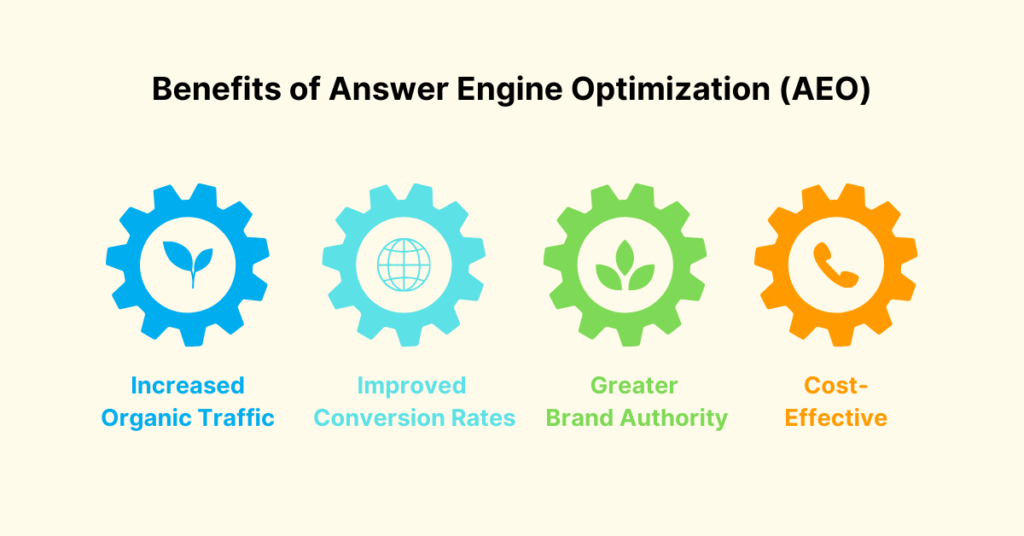
Conventional measures of page rank are insufficient. Calculate the answer prevalence, or the frequency with which your material is chosen as a voice assistant response, featured snippet, or FAQ rich result. Keep an eye on click-through changes when a snippet appears, track impressions in Search Console for query-level visibility, and track downstream conversion events brought on by response cards. Utilize log analysis to determine which searches result in a response from your website and improve underperforming pages. Successful AEO blends visibility with the appropriate downstream actions, such as time-on-site, conversions, or newsletter signups.
Juggling Zero-Click Solutions with Brand Visibility
Zero-click traffic is one issue with AEO; responses decrease clicks, making attribution and direct interaction more difficult. The solution is to create answer material that functions as a gateway, offering a comprehensive canonical response along with a subtly obvious next step that promotes deeper engagement, such as downloadable resources, tools, or an interactive calculator. In order to ensure that consumers continue to interact with your content after they have seen the answer snippet, label it to demonstrate brand ownership of the response and to offer value that only your site can extend (e.g., dynamic utilities, private data).
Scaling Up AEO Operations
Auditing top inquiries, mapping content types to schema, and creating templates for FAQ and how-to content are all necessary steps in scaling AEO. Develop a validation process for markup and canonical sentences and instruct writers on how to phrase their responses. To facilitate question discovery, including site search data and customer support records. Lastly, consider AEO to be cross-functional; the support, product, and SEO teams need to work together to uncover the most accurate and useful responses and keep them up to date as policies and products evolve.
In conclusion
Content teams’ perspective on discovery is altered by AEO, which emphasizes being the selected response rather than just a highly ranked site. The likelihood that assistants, widgets, and knowledge panels will display your material first increases if you prioritize organized how-to content and clear FAQs that are appropriately marked up and measured. The benefits are substantial, including increased user satisfaction, exposure to a trusted brand, and a long-lasting presence in the age of conversational search, but implementation calls for editorial discipline, schema rigor, and cross-team cooperation. Adopt AEO as a tactical addition to your SEO campaigns to get responses, actions, and enduring patronage.