
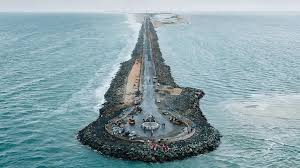
There’s something profoundly unsettling yet magnetic about places that nature has reclaimed. Dhanushkodi beach represents one of those rare locations where history, mythology, and natural forces converged to create a landscape unlike any other in India. This narrow strip of land at the southeastern tip of Tamil Nadu carries stories that go beyond typical tourist narratives—stories of a thriving town erased overnight, of pilgrims who once walked across shallow waters to reach another country, and of ancient epics that supposedly unfolded along these very shores thousands of years ago.
The town that once existed here met its catastrophic end during the 1964 Rameswaram cyclone, when winds exceeding 280 kilometers per hour and towering waves demolished everything in their path. A passenger train traveling toward the town was caught in the storm’s fury, and all 115 passengers aboard perished as the sea swallowed the railway tracks. What remained after the cyclone passed was ruins—skeletal remains of a post office, a railway station, a church, and homes that would never again shelter families. The government declared the area unfit for habitation, and Dhanushkodi earned its ghostly reputation.
But long before that fateful night in 1964, this place held significance that stretched back millennia. According to Hindu mythology, Lord Rama built a bridge from these shores to Lanka, and the name Dhanushkodi translates to “end of the bow,” referring to the spot where Rama supposedly broke his bow after the war with Ravana. Whether you subscribe to these legends or not, the area’s connection to the Ramayana gives it a spiritual weight that many visitors feel even as they walk among the ruins.
Today, the beach exists in a strange liminal state—not quite abandoned, not quite inhabited. A small fishing community has settled a few kilometers away from the ruins, living in makeshift structures despite official restrictions. Tourists arrive daily, drawn by the haunting beauty of the location and the contrast between the serene turquoise waters and the crumbling buildings that serve as reminders of nature’s overwhelming power. The journey to reach this place becomes part of the experience, as the road itself tells stories of isolation and persistence.
The Journey From Rameswaram to the Edge of India
Getting to this remote location isn’t straightforward, which adds to its mystique. The Rameswaram to Dhanushkodi distance spans roughly 18 kilometers, but the journey feels significantly longer due to road conditions and the gradual transformation of the landscape as you move toward the tip. The route begins in Rameswaram, itself a pilgrimage town famous for its temple and sacred bathing spots, before venturing into increasingly sparse terrain.
Most visitors hire local jeeps or vans for the trip, as private vehicles face restrictions in certain sections. The road alternates between paved sections and sandy patches where the distinction between road and beach blurs entirely. Driving through these stretches, you notice how the land narrows—on both sides, water becomes visible, creating the sensation of traveling on a fragile thread of earth suspended between the Bay of Bengal and the Indian Ocean.
The journey typically takes 45 minutes to an hour, depending on vehicle type and stops along the way. Drivers often pause at particularly scenic points where the water appears impossibly blue against white sand. These informal photo stops have become part of the standard route, though the real attraction lies ahead where the ruins wait.
Weather conditions dramatically affect the journey. During monsoon season, sections of the road may flood, making passage difficult or temporarily impossible. The summer months bring scorching heat that radiates off the sand, creating shimmering mirages in the distance. Winter offers the most comfortable conditions, with cooler temperatures and clearer skies that make the entire experience more pleasant.
Where the Land Runs Out, and Legends Take Over
Reaching Dhanushkodi proper means arriving at a place where geography becomes almost surreal. The land tapers to a narrow point where you can see water on multiple sides, creating a disorienting sense of being adrift despite standing on solid ground. The ruins appear gradually—first the remains of the railway station, then other structures in various states of decay, their walls standing like sentinels watching over an empty town.
Walking among these buildings generates an eerie feeling that’s hard to shake. The post office, with its partially intact walls, still shows traces of the paint that once colored it. The church stands roofless, its windows now framing views of sky and sea instead of stained glass. These structures resist complete dissolution, stubbornly maintaining their basic shapes even as erosion slowly claims more material each year.
The beach itself stretches in both directions, though the term “beach” doesn’t quite capture what you experience. This isn’t a place for casual swimming or sunbathing. The waters here carry a reputation for unpredictable currents and sudden depth changes. Local signs warn visitors about dangers, though enforcement remains minimal. Some tourists venture into the shallows despite warnings, while others prefer to simply walk along the shore, collecting shells and observing the fishing boats in the distance.
Photography enthusiasts find endless subjects here. The contrast between decay and natural beauty creates compositions that range from melancholic to almost transcendent. Sunrise and sunset transform the location entirely, with light playing across ruins and water in ways that seem almost intentionally staged. Many visitors time their trips to catch these golden hours, resulting in crowds that gather at prime spots well before the sun reaches the horizon.
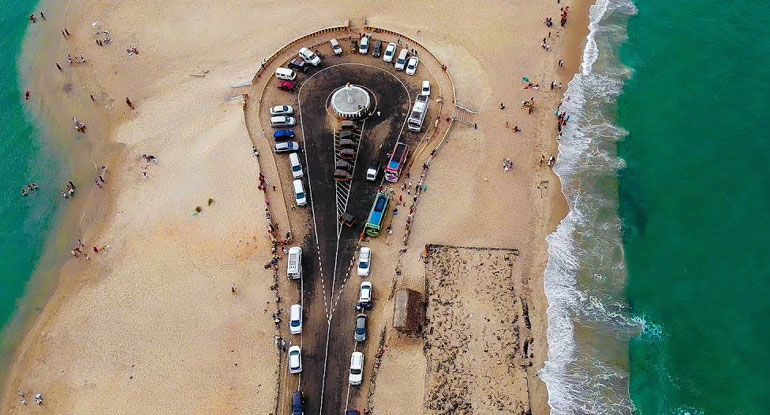
The Mythological Connection That Adds Depth to the Destination
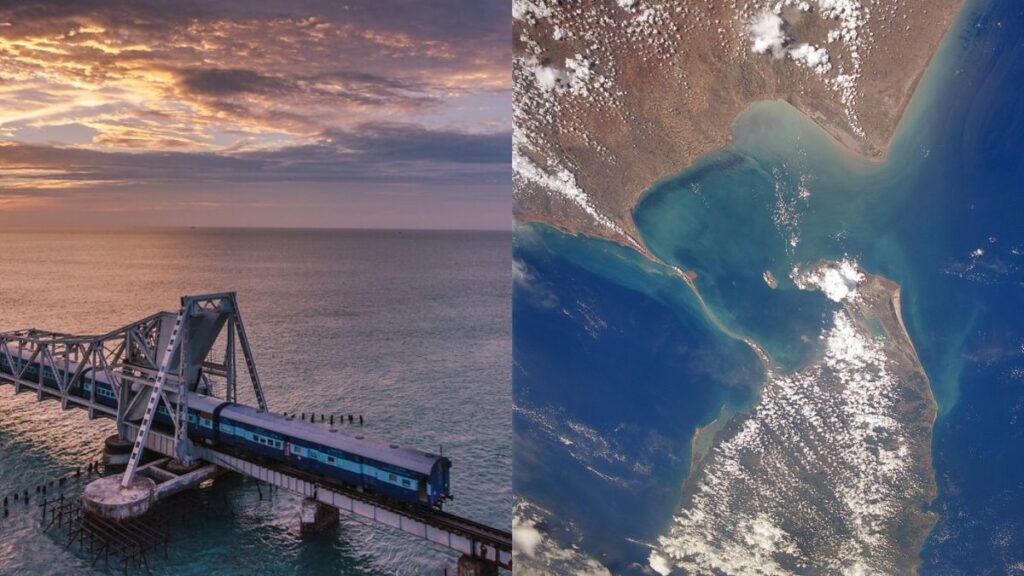
The association between Dhanushkodi Rameshwaram and the Ramayana epic gives the location layers of meaning beyond its tragic modern history. According to tradition, this exact area served as the launching point for Rama’s bridge to Lanka—the Ram Setu or Adam’s Bridge that supposedly connected India to the island nation. Geological formations visible in satellite imagery show a chain of limestone shoals stretching toward Sri Lanka, lending physical evidence to stories that many consider purely mythological.
Pilgrims visiting Rameswaram often include Dhanushkodi in their itinerary specifically because of these connections. They perform rituals at the water’s edge, believing that bathing here carries special spiritual significance. The fishing community that lives nearby has adapted to this religious tourism, offering simple services and guidance to visitors unfamiliar with local customs and geography.
The mythology extends beyond just the bridge construction. Local legends describe how Vibhishana, Ravana’s brother who sided with Rama, was crowned king of Lanka at this spot after the war concluded. Another story claims that Lord Rama shot an arrow into the sea here to create a freshwater source for his army, and that this underwater spring still exists somewhere off the coast. Whether these tales reflect actual events distorted by millennia of retelling or represent purely symbolic narratives, they’ve shaped how generations of people perceive and interact with this place.
Religious significance sometimes conflicts with environmental concerns. Rituals performed at the shore can leave behind offerings that contribute to pollution. Authorities struggle to balance respect for spiritual practices with the need to protect an already fragile ecosystem. This tension plays out subtly, with occasional cleanup drives and informational campaigns that attempt to educate visitors without disrespecting their beliefs.
How Close You Really Are to Another Country
One of the most intriguing aspects of standing at Dhanushkodi involves realizing just how close you are to another nation. The Dhanushkodi to Sri Lanka distance measures approximately 31 kilometers across the Palk Strait at this point, making it the shortest maritime distance between India and Sri Lanka. On particularly clear days, the outline of Sri Lankan land becomes faintly visible on the horizon, creating a sense of proximity that feels almost tangible.
This narrow stretch of water has historical significance beyond mythology. During periods when relations between the two countries were warmer, ferry services operated between Dhanushkodi and Talaimannar in Sri Lanka, allowing relatively easy passage for pilgrims and travelers. The 1964 cyclone destroyed the infrastructure supporting these services, and subsequent political tensions prevented their restoration. Today, the waters remain largely empty except for fishing vessels and coast guard patrols.
The international boundary runs through these waters, carefully negotiated and monitored despite the remote location. Fishing communities on both sides must respect these boundaries, though enforcement challenges arise in such a vast maritime area. Stories circulate about fishermen accidentally crossing into the wrong territorial waters and facing detention, highlighting how this seemingly peaceful stretch of sea carries political dimensions that visitors rarely consider.
Looking toward Sri Lanka from the Indian shore creates an interesting mental exercise. The narrowness of the separation makes the division between nations feel somewhat arbitrary, particularly when considering that millennia ago, people supposedly walked across these waters via the legendary bridge. Modern geopolitics has transformed what mythology describes as a connected space into a carefully monitored boundary that most people cannot simply cross, despite its proximity.
The Community That Refuses to Leave
Despite official declarations that Dhanushkodi remains uninhabitable, a resilient fishing community has established itself in the area. These families live in basic dwellings constructed from whatever materials they can gather, creating a settlement that exists in legal ambiguity. Their presence raises questions about land rights, government authority, and the determination of people to remain in places that hold meaning for them.
The fishermen here work difficult waters that offer generous catches for those skilled and brave enough to navigate them. The remoteness of the location means reduced competition from larger commercial operations, allowing small-scale fishers to maintain livelihoods that would be impossible in more developed coastal areas. They’ve developed intimate knowledge of local currents, weather patterns, and fish migration routes that guide their daily activities.
Life in this community lacks many conveniences considered essential elsewhere. Electricity remains unreliable, requiring reliance on generators and solar panels. Fresh water must be transported from Rameswaram or collected during the rains. Medical facilities don’t exist, necessitating travel to town for even minor health issues. Children attending school face long commutes that test their commitment to education.
Yet residents express little desire to relocate permanently. The freedom of the lifestyle, the connection to the sea, and the unique character of the location outweigh hardships for many families. They’ve created a micro-society that operates according to its own rhythms, largely independent of government oversight. This independence comes with vulnerability—during severe weather, they receive minimal protection or support, relying instead on community solidarity and accumulated knowledge of storm patterns.
What Remains of the Old Town’s Infrastructure
The ruins scattered across Dhanushkodi tell stories through their very existence. The railway station, perhaps the most photographed structure, stands as a reminder of when this town served as a significant transit point. Trains once arrived here carrying passengers who would then board ferries to Sri Lanka, making it a crucial link in a now-discontinued route that connected the subcontinent to the island nation.
The church ruins attract particular attention from visitors, partly due to their architectural distinctiveness and partly because of the incongruity of seeing a Christian structure in such a predominantly Hindu pilgrimage area. The building’s stone construction has weathered decades better than many surrounding structures that used less durable materials. The absence of a roof creates an open-air feel that transforms the space into something between a building and a sculpture.
Residential ruins scatter throughout the area, though these have deteriorated more severely than public buildings. Homes built with less robust materials have largely crumbled, leaving only foundation traces and occasional wall fragments. Walking through these areas requires imagination to visualize the town that once existed—streets lined with houses, shops serving daily needs, children playing in alleys that have since disappeared under sand and salt-weathered debris.
Preservation efforts face numerous challenges. The corrosive effects of salt air and occasional storm surges continue to degrade what remains. Official interest in maintaining the ruins as heritage sites competes with limited budgets and questions about whether preservation even makes sense for a location declared uninhabitable. Some argue that allowing nature to reclaim the area represents a more honest approach than artificial preservation efforts.
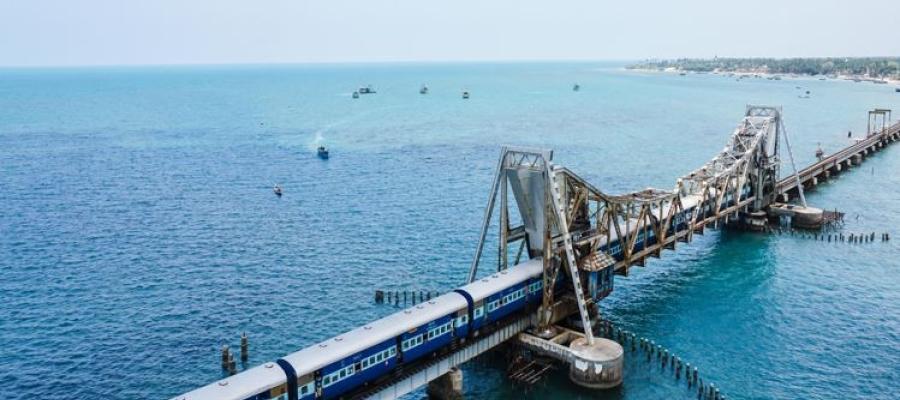
The Changing Colors of Water and Sand
The Dhanushkodi beach experience includes witnessing water colors that seem almost artificial in their intensity. The meeting of the Bay of Bengal and the Indian Ocean creates visual effects where different shades of blue and green swirl together, producing gradients that photographers struggle to capture accurately. Shallow areas near shore glow with turquoise brightness, while deeper sections darken to navy and nearly black.
Sand quality varies along the stretch. Some sections feature fine, pale sand that feels almost powdery underfoot, while others contain coarser grains mixed with shell fragments that crunch when walked upon. The tide dramatically alters the beach’s appearance, with low tide exposing extensive flats that stretch far from the original shoreline, and high tide bringing waves that sometimes threaten to reach the ruins themselves.
Seaweed and other marine vegetation wash ashore in quantities that fluctuate seasonally. During certain months, large accumulations create barriers along the waterline, while at other times the beach remains relatively clean. These natural cycles affect both the area’s visual appeal and its accessibility, with particularly heavy seaweed deposits making some sections difficult to navigate.
The absence of significant development means the beach retains a wild character increasingly rare along India’s coasts. No beach resorts, no organized water sports, no vendors selling snacks—just sand, water, ruins, and the occasional fishing boat. This undeveloped state attracts visitors seeking authentic coastal experiences untouched by commercial tourism infrastructure.
Practical Considerations for Modern Visitors
Visiting Dhanushkodi requires more planning than typical beach destinations. The lack of facilities means bringing sufficient water and snacks becomes essential, particularly during hotter months when dehydration risks increase. No restaurants or shops operate in the immediate area, and the fishing community offers only very basic services.
Transportation arrangements should be made in advance when possible. While jeeps and vans typically wait at the Rameswaram starting point, demand can exceed supply during peak tourist periods. Confirming return transportation before departing ensures you won’t become stranded at the isolated location. Most drivers wait while tourists explore, but clear communication about duration prevents misunderstandings.
Appropriate footwear matters more than many visitors anticipate. The combination of hot sand, potentially sharp debris among ruins, and occasional wet sections near the waterline makes sturdy sandals or water shoes advisable. The temptation to explore barefoot often results in discomfort or minor injuries that could be easily prevented.
Sun protection becomes critical given the complete lack of shade throughout most of the area. Sunscreen, hats, and sunglasses should be considered mandatory rather than optional. The reflective qualities of sand and water intensify sun exposure, creating conditions where burns develop quickly, even on overcast days.
The Environmental Fragility of the Coastal Strip
The narrow land formation supporting Dhanushkodi faces ongoing environmental pressures. Coastal erosion gradually reduces the width of the strip, raising concerns about the long-term viability of even the modest human presence that currently exists. Sea level rise associated with climate change accelerates these processes, threatening to eventually submerge portions of the area that currently remain above water.
Marine ecosystems around Dhanushkodi support diverse species despite human activities and past disturbances. The Gulf of Mannar Marine National Park lies nearby, and similar ecological richness characterizes the waters off Dhanushkodi. Coral formations, seagrass beds, and various fish species create complex food webs that fishing communities depend upon for their livelihoods.
Pollution concerns arise from multiple sources. Tourist activities generate waste that doesn’t always get properly removed. Fishing operations leave behind nets, ropes, and other materials that contribute to marine debris. Religious offerings made at the shore sometimes include non-biodegradable materials that persist in the environment long after their spiritual purpose has been served.
Conservation organizations occasionally advocate for stronger protections for the area, though implementation faces resistance from both fishing communities and tourism interests. Balancing environmental preservation with the economic needs of local residents and the cultural significance for pilgrims creates challenges that simple regulations cannot easily address. The area exists in a state of tension between competing interests that will likely continue defining its future.
Why Photographers Consider This Location Special
The unique combination of elements at Dhanushkodi creates photographic opportunities that professional and amateur photographers alike seek out. The juxtaposition of human-made ruins against natural beauty provides ready-made compositions that require minimal setup. The isolation and emptiness of the area allow experimentation without crowds interfering with frames.
Lighting conditions throughout the day offer constantly changing moods. Morning light tends toward cooler tones that emphasize the desolation of the ruins, while afternoon sun creates harsh contrasts that can be challenging but also dramatic. The golden hour transforms everything, casting warm glows across weathered stone and creating long shadows that add depth to relatively flat landscapes.
Weather variations add another dimension to photographic possibilities. Approaching storms create brooding skies that contrast with the typically sunny perception of beach destinations. Post-rain conditions bring clarity to the atmosphere that makes the water appear more luminous and the distant Sri Lankan coastline more visible. These atmospheric variations mean the location never looks quite the same twice.
The absence of regulations regarding photography means creators can work freely without permits or restrictions that complicate shooting in more developed areas. This freedom attracts photographers working on personal projects, commercial assignments, or simply seeking portfolio material that stands out from typical beach imagery. The ruins serve as instantly recognizable elements that communicate both place and mood without requiring extensive captions or explanations.
Conclusion
Standing where Dhanushkodi beach meets the ruins of what was once a thriving town creates reflections on impermanence and resilience. The landscape embodies contradictions—beauty and tragedy, mythology and history, isolation and connection. Whether visitors come seeking spiritual experiences, photographic subjects, or simply unusual destinations, this remote corner of Tamil Nadu delivers something that lingers long after departure. The ghost town continues attracting those drawn to places where stories layer upon each other like sediment, creating depths that casual observation cannot fully reveal.