
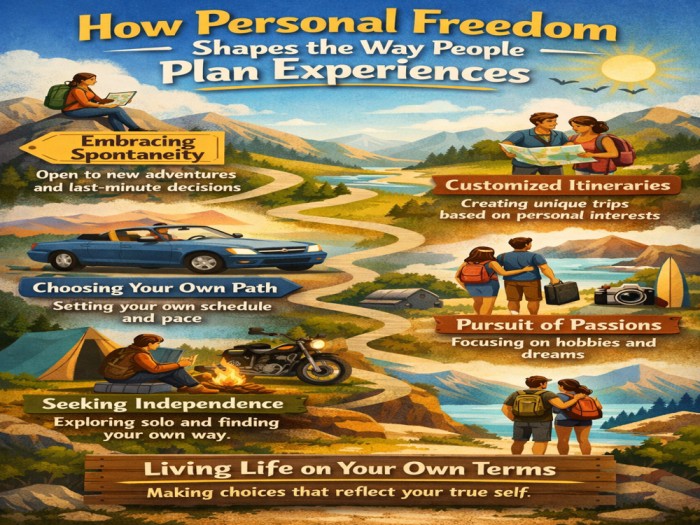
Personal freedom is one of the most powerful forces influencing how people design their lives. It affects career choices, lifestyle decisions, travel habits, and the types of experiences individuals seek out. In recent years, as technology, mobility, and global connectivity have expanded, people have gained more opportunities than ever before to plan experiences that reflect their personal values and interests.
From travel adventures and outdoor pursuits to creative hobbies and community events, the concept of freedom often shapes not just what people choose to do, but how they plan and structure those experiences. The desire to control time, movement, and personal priorities plays a central role in how modern experiences are imagined and executed.
The Growing Importance of Autonomy in Lifestyle Decisions
One of the clearest ways that personal freedom influences experience planning is through the growing desire for autonomy. Many people now prioritize having control over how they spend their time and where they direct their energy.
This shift can be seen in several areas of modern life. Flexible working arrangements, remote employment, and freelance careers have allowed people to escape rigid schedules that previously dictated daily routines. With more control over time, people can plan experiences that align with personal passions, whether that involves travel, creative pursuits, or sporting activities.
Instead of waiting for limited holiday windows or scheduled events, individuals can increasingly shape their calendars around experiences that matter to them. This autonomy encourages people to plan activities more intentionally, often seeking deeper and more meaningful engagement with the things they enjoy.
Travel as a Symbol of Personal Freedom
Travel has long been associated with the idea of freedom. The ability to leave familiar surroundings, explore new environments, and encounter different cultures represents a form of liberation from routine.
Modern travelers often design experiences that emphasize independence rather than rigid itineraries. Road trips, backpacking adventures, and motorcycle touring have become popular because they allow people to move at their own pace and follow spontaneous interests.
The freedom to decide where to go, how long to stay, and what to explore creates a powerful sense of ownership over the journey. Unlike structured tours, these self-directed experiences allow travelers to adapt plans as they go, responding to opportunities and discoveries along the way. For many enthusiasts, the journey itself becomes as meaningful as the destination.
Experience Planning in the Age of Digital Tools
Technology has significantly expanded the ways people plan experiences. Online platforms provide access to travel information, booking tools, community recommendations, and logistical support that were once difficult to obtain.
These tools allow individuals to design highly personalized experiences. Instead of relying on travel agencies or fixed packages, people can research locations, compare options, and customize every detail of their plans.
Digital platforms also make it easier to coordinate complex elements of an experience. For example, someone planning a riding adventure across multiple states might arrange accommodations, routes, and vehicle logistics in advance. When transporting vehicles across long distances, services that provide San Jose car shipping can simplify the process so travelers can focus on enjoying the journey itself.
By removing logistical barriers, technology gives people greater freedom to pursue the experiences they want.
The Rise of Adventure-Oriented Experiences
Personal freedom often encourages people to seek experiences that challenge them physically, mentally, or emotionally. Adventure travel, outdoor sports, and immersive activities have become increasingly popular because they offer a break from structured daily life.
Activities such as hiking, motorcycle touring, cycling, and sailing provide opportunities to reconnect with the natural world while also exercising personal independence. These experiences often require planning and preparation, but they also allow participants to step outside conventional routines.
Adventure-oriented experiences appeal to people because they combine exploration with self-determination. The participant isn’t simply consuming entertainment but actively shaping the journey. This sense of agency can make the experience more rewarding and memorable.
Personal Freedom and Identity
Experiences often serve as expressions of identity. The activities people choose to pursue can reflect personal values, interests, and aspirations. For some, this might mean traveling to cultural festivals or historical sites. For others, it could involve participating in sports events, attending music gatherings, or exploring remote landscapes.
Personal freedom allows people to align their experiences with the aspects of life that matter most to them. The ability to choose experiences that reflect personal identity strengthens emotional connections to those activities.
In many cases, the planning process itself becomes part of that expression. Selecting destinations, organizing routes, or gathering equipment can feel like creative acts that reflect individual personality.
Community and Shared Freedom
While personal freedom often emphasizes independence, many experiences also involve shared communities. Groups built around hobbies, sports, or travel interests often come together to participate in events or adventures.
Motorcycle rallies, cycling tours, hiking expeditions, and sporting events often attract people who share a common passion. These communities allow individuals to pursue personal interests while also connecting with others who value the same activities.
The combination of independence and community can be especially powerful. Participants maintain the freedom to shape their own journeys while still sharing moments with others who understand the appeal of those experiences.
This balance between individuality and connection is one of the reasons many experience-based communities remain strong over time.
The Psychological Benefits of Self-Directed Experiences
Experiences shaped by personal freedom can also have psychological benefits. When people feel that they’re choosing activities freely rather than fulfilling obligations, they often experience greater satisfaction and engagement. Psychologists frequently highlight the importance of autonomy in motivation and wellbeing. When people feel ownership over their decisions, they’re more likely to feel fulfilled by the outcomes.
Self-directed experiences allow individuals to pursue curiosity, challenge themselves, and discover new interests. These opportunities can create lasting memories and contribute to a stronger sense of personal growth.
The act of planning the experience itself can also generate excitement and anticipation. Research often shows that people derive happiness not only from the activity itself but also from the process of preparing for it.
Service providers that support these goals by simplifying logistics, offering flexible options, and empowering users to create their own journeys will play an important role in the future of experience-based lifestyles.