
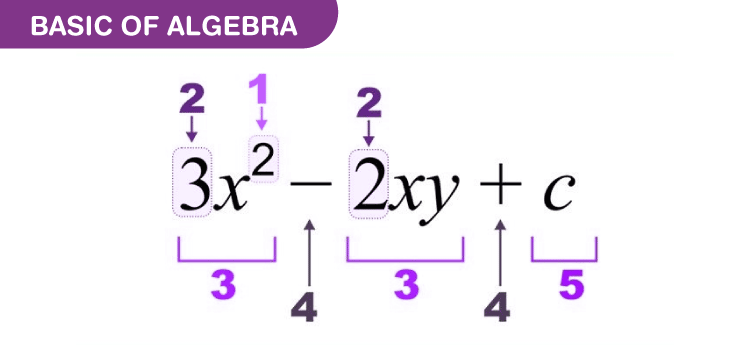
Algebra is one of the most fundamental areas of mathematics, which is frequently referred to as the language of logic. It has been the basis for resolving issues ranging from basic equations to sophisticated scientific models for centuries. The question What is algebra? and why it is so important is frequently asked by students who first meet it in their academic careers. To put it simply, algebra is the use of numbers, characters, and symbols to represent and logically solve issues. It creates the foundation for more complex mathematics and real-world applications.
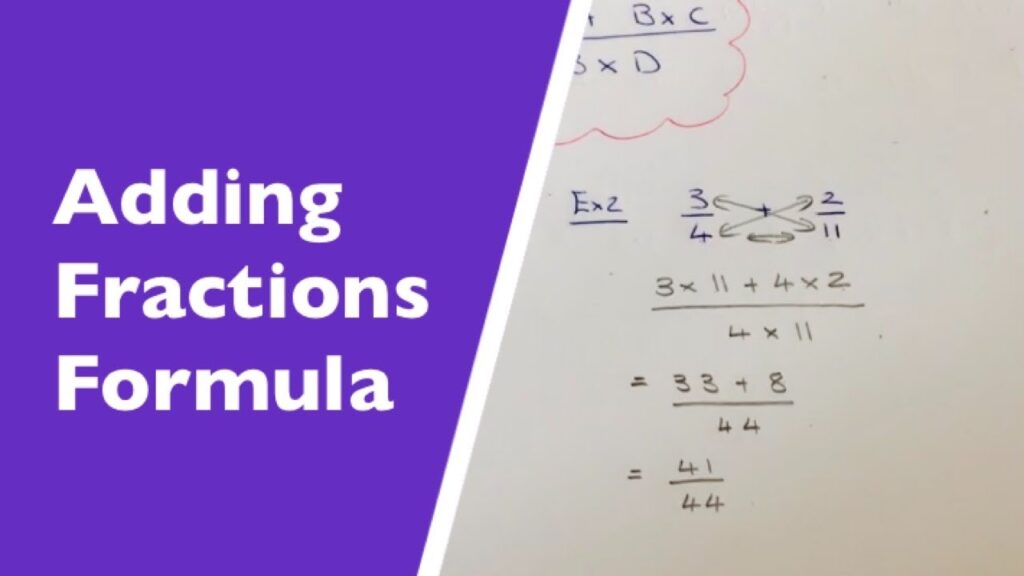
Understanding how to do algebra with fractions is one of the numerous difficulties that pupils encounter. Because fractions involve numerators, denominators, and rules of simplification, they introduce an additional level of complexity. They need close attention when paired with algebra, but if learned, they open up more complex problem-solving abilities. This makes algebra a vital tool for reasoning in the actual world rather than just a subject found in textbooks.
By demonstrating that every polynomial problem has at least one solution, the fundamental theorem of algebra emphasizes the importance of the subject even further. This theorem demonstrates how algebra guarantees completeness in problem solving by bridging the gap between the abstract and the concrete. These realizations show why algebra has influenced mathematics for centuries and still has an impact on contemporary sciences.
Before tackling more complex subjects, resources such as pre-algebra worksheets and pre-algebra problems assist beginners in gaining confidence. These kinds of tools guarantee that students have a solid foundation and reinforce skills. As they advance, children learn important algebra formulas, work through challenging algebra problems, and recognize the connections between algebra and other facets of academic development.
This blog will cover the fundamentals of algebra, fractions, key theorems and formulas, and real-world strategies for students to improve their knowledge. Through exercises and practical applications, you will acquire a thorough knowledge of the importance of mathematics and how to efficiently master it.
What is algebra?
Algebra is fundamentally the study of symbols and the rules governing their manipulation. Algebra uses variables to generalize mathematical concepts, in contrast to arithmetic, which concentrates on particular integers. This enables us to explain relationships, create formulas, and solve unknowns. We discover that algebra is a universal language for problem-solving and encompasses more than just equations.
Comprehending Fractions in Algebra
For novices, learning how to do algebra with fractions can be frightening. Because operations like addition and multiplication call for common denominators or simplification, fractions make equations more difficult to understand. However, fractions become manageable for pupils if they practice methodically. Because they are commonly used in real-world algebraic issues, such as physics models and financial computations, mastering them is essential.
The Importance Of Algebra’s Fundamental Theorem
The fundamental theorem of algebra asserts that there is at least one complex root in every polynomial equation. This theorem is essential for advanced math and science since it guarantees completeness in algebraic solutions. It illustrates how algebra relates to the larger field of mathematics by bridging basic algebraic ideas with more complicated areas like calculus and complex analysis.
Why Algebra Formulas Are Important
Algebra formulas are the foundation of equation solving. These formulas streamline usually time-consuming calculations, such as binomial expansions and quadratic equations. They increase algebra’s efficiency by offering shortcuts without sacrificing precision. Formula memorization and application are essential for developing analytical thinking in higher education as well as for exams.
The Function of Common Algebra Problems in Learning
Students benefit from practicing algebra problems until they become instinctive. Basic linear equations and complex polynomial identities are examples of problems. Solving them fosters perseverance, logical thinking, and problem-solving abilities. Additionally, they prepare students for situations in which algebra is a crucial tool in the real world.
Prior Algebra as a Basis
It is common for students to start with pre-algebra problems before delving deeply into complex equations. They cover fundamental concepts, including fractions, simple equations, and integers, and act as stepping stones. Pre-algebra worksheets assist students in strengthening the fundamental abilities that get them ready for more complex algebra. Building confidence and avoiding knowledge gaps later on depend on this stage.
Applications of Algebra in Real Life
Algebra has a big impact on actual life outside of the classroom. Algebra offers the foundation for logical reasoning in a variety of contexts, including interest rate calculations, data analysis, and physics comprehension. For example, engineering mostly relies on equation solving, whereas budgeting necessitates algebraic computations. Students who successfully complete algebra will be able to use arithmetic in both personal and professional settings.

Overcoming Algebra Learning Obstacles
Because mathematics necessitates abstract thought, many students find it challenging. It can be stressful to memorize formulas, fractions, and complicated theorems. Worksheets, interactive applications, and guided tutorials are examples of structured materials that can help get beyond these obstacles. Algebra becomes less daunting and more approachable with regular practice.
Algebra’s Development in Education
From ancient civilizations to contemporary educational systems, algebra has changed over time. These days, schools emphasize its value as a core subject by introducing it earlier. Algebra has also been transformed by technological instruments, such as digital calculators and online practice platforms, which have made it more participatory and available to students worldwide.
Why Algebra Is Still Important Today
Even with the speed at which technology is developing, algebra is still useful. Algebraic concepts are essential to data science, computer programming, and artificial intelligence. Being prepared for contemporary jobs that need logical and analytical abilities requires an understanding of algebra. It is not only about passing tests; it is also about flourishing in a world where logic and numbers rule.
Final Thoughts
The foundation of mathematics and logical problem-solving is algebra, which includes everything from fundamental fractions to sophisticated theorems. Students gain abilities that extend beyond the classroom by investigating what is algebra, learning how to do algebra with fractions, and using algebra formulas. Resources such as pre-algebra problems and pre-algebra worksheets offer stepping stones for boosting self-confidence. Since the fundamental theorem of algebra guarantees that equations are complete, it is evident that algebra is more than just a subject; it is a tool for success and reasoning that lasts a lifetime.