
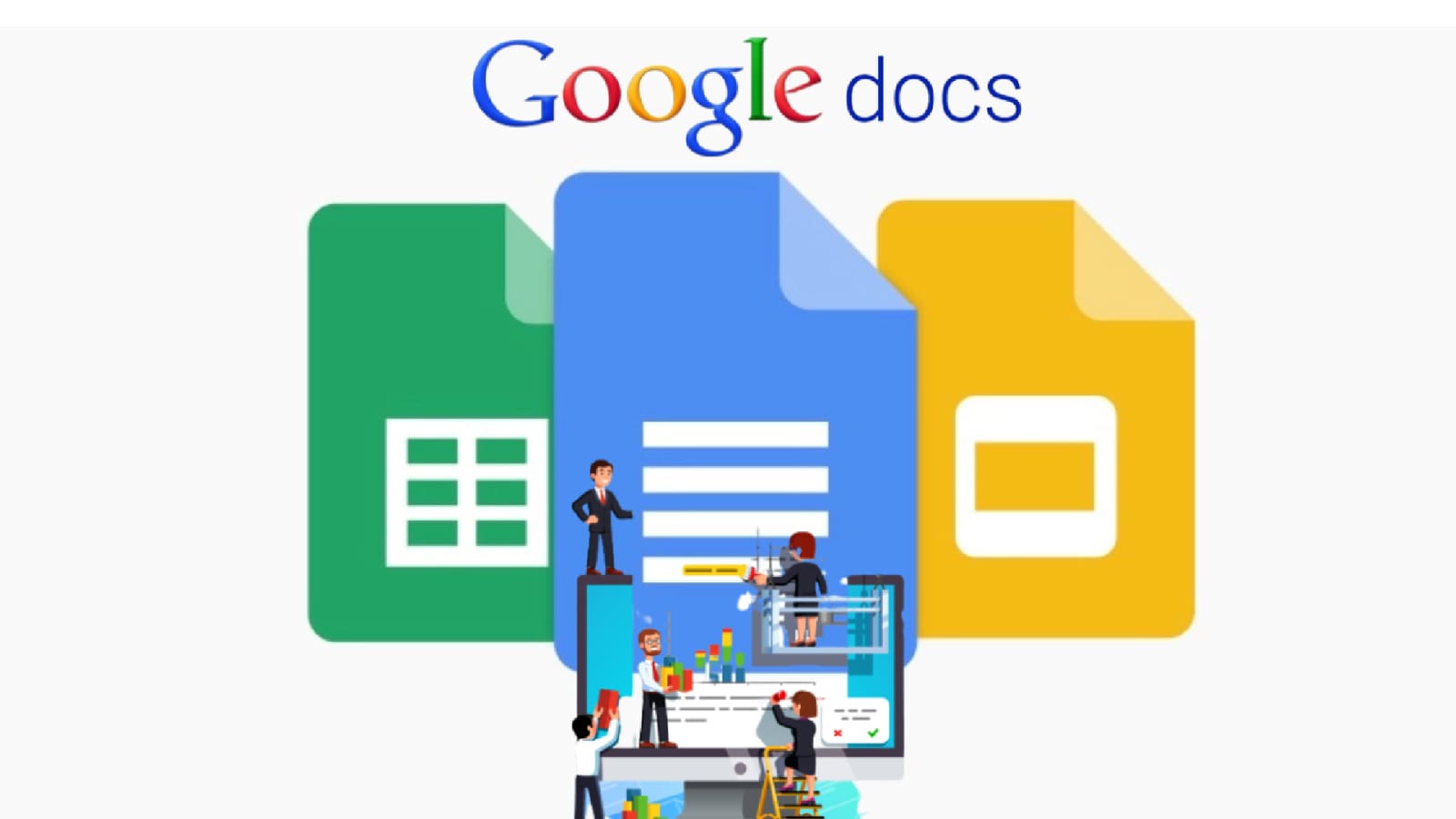
Google Docs, a free cloud-based word editing program that functions flawlessly on all platforms, has emerged as the foundation of contemporary collaboration. Knowing how to use Google Docs well may help you save time and make your papers look more professional, whether you’re writing an essay, creating a report, or discussing ideas with coworkers. Starting with the fundamentals—sharing files, adjusting toolbars, and navigating the interface—we’ll gradually go over more sophisticated strategies that improve workflow. We’ve condensed years of combined experience into doable actions, from optimizing layout settings to switching to dark mode for late-night editing sessions. With the formatting tips and shortcuts that professional users utilize on a regular basis, you’ll feel ready to take on any document problem by the conclusion of this article. Let’s get started and make the most of Google Docs so that each page you produce showcases your concepts and well-honed presenting abilities.
Modifying Document Layout Accurately
It’s important to properly set up your website before you start typing. To modify white space for printing or reading, refer to the instructions on how to change margins in Google Docs. To manually input settings for the top, bottom, left, and right margins, select File > Page setup. You may select your chosen Format as default in this option if you often move between different margin settings, such as academic essays at 1 inch and business reports at 0.75 inches. By making this easy change, you may avoid uncomfortable line breaks or cropped text when sharing your papers with others and maintain uniformity across all of them.
Effectively Eliminating Unwanted Content
Long papers can occasionally produce additional sections or blank pages that break the flow. Understanding how to delete a page in Google Docs becomes crucial if you come across an excess sheet at the conclusion of your report. Press Delete (Mac) or Backspace (Windows) after clicking at the top of the undesirable page until it disappears. Alternatively, you may find and remove specific breaks by using View > Show section breaks to expose unseen text. Gaining proficiency with this method guarantees that your final work is clean and that the page counts match correctly, whether printing hard copies or exporting to PDF.
Using Regular Spacing to Improve Readability
A block of text becomes a paragraph that is easy to read when the line spacing is appropriate. To use how to double space in Google Docs, select the full document (Ctrl+A) or highlight your text, then click the Line & paragraph spacing button in the toolbar and pick 2.0 from the list. Choose Custom spacing and input your desired number for custom values, such as 1.15 for a tighter appearance. In addition to following style rules, consistent spacing makes reading easier for readers and lessens eye strain during lengthy reading sessions or in-depth reviews.
Using Strikethrough to Make Explicit Edits
It could be necessary to mark material for deletion when working together on drafts so that the original phrasing is still visible. By selecting the target text and selecting Format> Text > Strikethrough, or by hitting Alt+Shift+5 (Windows) or Command+Shift+X (Mac), you may put how to strikethrough on Google Docs into practice. This effect indicates deletions or recommendations by displaying a horizontal line through the text. Strikethrough allows colleagues to examine changes before approving the final version while maintaining your editor’s purpose and context, unlike outright removing stuff.
Easily Crossing Out Text
How to cross out text in Google Docs allows you to mark revisions in a similar way to a strikethrough. The usual method is a strikethrough; however, you may alternatively add a drawing. To add a text box, input your text, and then draw a line above it, choose Insert > Drawing > +New. The crossed-out content aligns with your paragraph once it has been saved. Despite being a little more complex, this technique provides visual customisation by allowing you to change the color, thickness, and angle of lines, which is perfect for presentations or graphic papers where style is important.
How to Make Expert Hanging Indents
Hanging indents, in which all lines other than the first are indented, are frequently required for academic papers and bibliographies. To find out how to do a hanging indent on Google Docs, position your cursor in the paragraph, select Format > Align & indent > Indentation options, select Hanging under Special indent, and then adjust the indentation to your preferred level (usually 0.5 inches). This procedure improves the Readability of your reference lists by providing them a consistent, polished look that conforms to style guides and facilitates reader navigation across multilined items.
Using Word Count to Monitor Progress
Keeping an eye on document length is essential for both students and content producers. It is easy to see how to check word count on Google Docs by selecting Tools > Word count or by hitting Ctrl+Shift+C (Windows) or Command+Shift+C (Mac). Total words, pages, characters, and characters excluding spaces are displayed in a dialog box. By selecting the Display word count while typing option, a live counter is fixed in the bottom corner of your screen, making it ideal for meeting deadlines without being distracted or having to navigate between menus all the time.
Giving Pages Sequential Numbering
Clear pagination is nearly always required for professional texts. Insert > Page numbers is the first step in the how to add page numbers in Google Docs procedure. Next, you must choose a style, such as top or bottom placement, or first page inclusion or exclusion. By altering typefaces and positioning to fit the style of your document, you may further personalize numbers in the header or footer section. In addition to providing readers with guidance, accurate page numbering makes cross-document citations and collaborative reviews easier.
Adding Text Boxes That Change
To highlight callouts, side notes, or quotes, learn how to insert a text box in Google Docs. Click the Text box icon, select Insert > Drawing > +New, and then draw your box inside the canvas. Before choosing Save and Close, make any necessary adjustments to the font’s size and position after inputting your material. The text box can be repositioned, have its background color changed, or have text wrapped around it. With the help of this function, you can break up lengthy paragraphs and highlight important points without depending only on headers, giving your design more freedom.
More Complex Formatting: MLA Style, Dark Mode, and Subscripts
Mastering sophisticated adjustments completes your toolbox and improves every document. To apply how to do subscript in Google Docs, click Format > Text > Subscript after selecting text. Switch to how to make Google Docs dark mode for comfortable late-night work by turning on the Dark theme in the mobile app’s Settings or by utilizing a desktop browser extension. Lastly, adhere to the instructions on how to do MLA format on Google Docs for academic rigor: Use Times New Roman 12-pt font, double-space text, establish 1-inch margins, and include a header with your page number and last name. When combined, these characteristics guarantee that your work is exceptional in all settings, including lab reports and creative portfolios.
In conclusion
Beneath its straightforward interface, Google Docs provides an incredibly extensive collection of capabilities. Gain total control over your documents by becoming proficient with layout settings, revision markers, spacing norms, and sophisticated styles, such as dark mode and hanging indents. These abilities improve Readability and expedite your productivity while writing academic papers, business proposals, or working with international teams. Adopt these strategies and allow Google Docs to transform into a dynamic canvas for your ideas rather than merely a writing tool.