
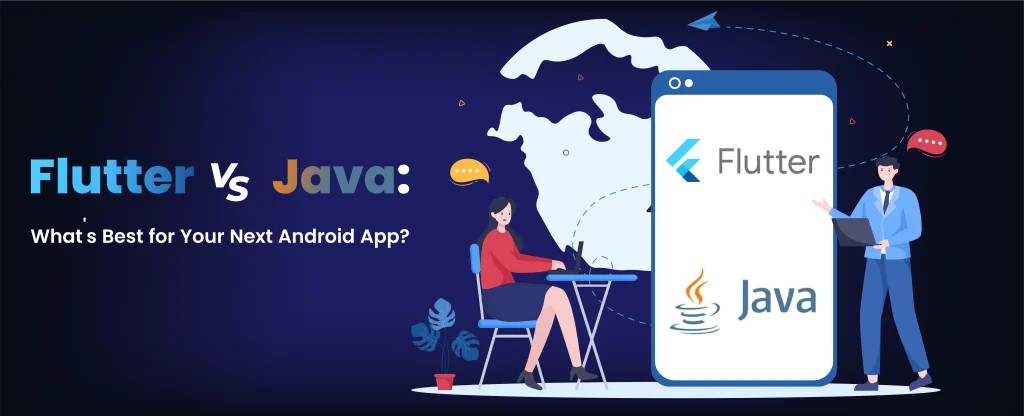
Some questions in tech sound simple until you actually try to answer them. Is Flutter easier than Java? This one has been floating around in developer circles for years now. Someone usually asks it right when they’re stuck choosing a first programming direction or when switching careers feels like the only way forward. The interesting thing is that there’s no neat, one-sentence answer, and maybe that’s why people keep asking. These two technologies sit in different corners of the tech world, and yet they meet again and again because of how many beginners compare them.
If you’ve ever searched for guidance, you’ve probably stumbled upon different opinions—some casual, some slightly dramatic.
One developer says Flutter felt amazingly simple from day one; another claims Java shaped their foundation in a way no framework ever could. And somewhere in the middle, you see someone talking about Flutter developer jobs growing over the years, making you wonder whether the learning journey is worth the effort. Or maybe you’re someone who looked up Flutter developer salary and thought, “Okay, maybe this isn’t such a bad idea after all.”
Learning anything technical rarely follows a straight path. Sometimes the first step feels overwhelming, sometimes surprisingly light. Flutter users talk about seeing UI changes instantly, almost like magic. Java learners mention those long, structured lessons that made them understand logic more deeply than expected. There’s beauty in both experiences. And confusion too.
This blog doesn’t force a verdict; instead, it walks through how both technologies feel when you’re actually learning them. It jumps between stories, perspectives, practical comparisons, and the emotional bits developers don’t always talk about. Because your tech journey is not only about syntax or frameworks — it’s also about how your brain adapts, how your curiosity grows, and how you evolve into someone who enjoys solving problems you once found intimidating.
So, let’s take an honest, unhurried look at both. You might find your answer somewhere between the lines.
Understanding What It Means For A Language To Be “Easy”
When someone asks Is Flutter easy or Java? The question usually hides another one: “How long will it take before I feel confident?” Ease is not just about syntax or documentation. It also includes familiarity with concepts, exposure to coding environments, and how quickly your mind connects abstract ideas.
For complete beginners, Java introduces them to the deeper foundations of computer science—loops, classes, objects, and types. Flutter sits on top of Dart, which many learners find gentler because it feels more modern. But then again, some people appreciate structure more than flexibility. So the idea of “easy” shifts from person to person.
How Background Influences Your Choice
If someone already knows a C-based language, Java might click faster. It has patterns you’ve seen before. If someone has spent time playing with UI builders, Flutter might feel intuitive instead. Every learner carries a unique background, and that shapes everything.
Interestingly, many self-taught developers report that Flutter offered quicker gratification. They could build a screen, see a layout, modify colors, and watch changes live. Meanwhile, Java developers talk about the quiet sense of grounding that comes from understanding how things work behind the scenes.
Both experiences matter. And both can be valid reasons to choose a direction.
The Role Of Dart In Making Flutter Beginner-Friendly
One reason some people lean toward Flutter is Dart — a language built to feel smooth. It has fewer rules than Java, fewer surprises, and a more forgiving personality. When people consider Flutter is easy or Java, they often forget that learning Dart is part of Flutter’s journey. Many describe Dart as “comfortable,” almost like it meets beginners halfway.
You write code. It runs. You tweak something. It updates. The loop feels natural.
The Depth And Structure Of Java For New Learners
Java, on the other hand, teaches you structure from day one. Its strictness sometimes irritates beginners, yet strangely, it also shapes strong habits. You start understanding what classes actually mean, why objects matter, and how programs grow into large systems.
This foundation later helps developers pick up other languages more quickly. Many senior engineers repeatedly attribute their clarity in problem-solving to early Java exposure.
So while Java may look harder at first glance, the payoff is long-term clarity.
Exploring Career Paths Connected To Flutter
The rise in Flutter developer jobs over the last few years isn’t surprising. Companies want apps that run on both Android and iOS without the cost of building two separate teams. Flutter sits perfectly in this space. It appeals to startups, mid-sized companies, and even some global organizations running quick development cycles.
And because Flutter is still growing, developers often enjoy less competition than in more saturated fields. But trends shift. Tech evolves. Still, many career pages today list Flutter as a skill they’re actively hunting for.
Understanding Flutter Salaries And Market Expectations
If someone glances at Flutter developer salary ranges across different cities, they might feel encouraged. Salaries tend to reflect the demand for multi-platform developers and the relative youth of the framework. Pay varies widely depending on experience, but even entry-level roles sometimes offer surprisingly competitive numbers.
Salary isn’t everything, of course. But it signals how industries value certain skills.
Comparing The Learning Experience Between Flutter UI And Java Logic
Flutter lets you see results instantly. Java makes you think more deeply about logic. Both experiences matter, but they affect motivation differently.
Sometimes the fast feedback of Flutter keeps beginners hooked longer. Sometimes the intellectual challenge of Java inspires people to dig deeper. One person might feel energized by visuals. Another by algorithms.
There’s no winner here. Just differences.
How Real Developers Describe Their First Few Weeks
Talk to someone who learned Flutter, and they’ll describe the joy of watching widgets snap into place. Talk to someone who learned Java, and they’ll mention that moment when object-oriented programming suddenly “made sense.”
The funny part? Both groups start with confusion. Then slowly — unexpectedly — something clicks.
And once it clicks, the fear fades.
The Importance Of Project-Based Learning
Regardless of whether you choose Flutter or Java, building projects matters more than reading tutorials. Many learners underestimate this. They assume theoretical understanding will be enough. But real learning begins when your code breaks.
Building your first simple app in Flutter brings a kind of excitement that sustains motivation. Writing your first full Java program triggers a sense of “I’m actually doing this.” Those small victories push learning forward.
Projects become your language.
Making The Right Choice For Your Personal Journey
You shouldn’t pick based on trends alone. You shouldn’t pick solely because someone online said one is easier. Choosing between Flutter and Java depends on two things: the kind of development you want to do and the kind of learning rhythm you prefer.
If mobile, UI, and quicker results motivate you, Flutter fits well. If foundational knowledge, logic building, and long-term engineering roles appeal to you, Java remains timeless.
Your answer exists in your goals — not in someone else’s experience.
Conclusion
Whether someone wonders if Flutter is easier than Java, the truth is that both paths shape capable developers, Flutter brings speed, visuals, and a modern workflow. Java offers structure, depth, and decades of engineering wisdom. As industries evolve, opportunities like Flutter developer jobs continue to grow, and factors such as Flutter developer salary influence career decisions — but ultimately, the best choice is the one that aligns with how you prefer to learn, think, and create. With consistency, any path becomes rewarding.