
There’s a point in almost every developer’s life when someone throws the question at them — react native vs Flutter, which one should I choose? It usually happens right before they start a new project or when they’re feeling brave enough to learn something outside their comfort zone. And it’s funny how such a short question has a way of spiraling into long internal debates. People scroll through forums, watch videos, listen to friends who swear by one or the other, and still end up unsure. That uncertainty isn’t a weakness; it’s simply because both frameworks are strong in different places.
When beginners peek into this world for the first time, things feel both exciting and confusing. React Native speaks the language of JavaScript, which many learners have already touched through web development. Flutter arrives with its own personality through Dart, which some people instantly enjoy because of its smoothness and simplicity. Understanding where to begin can feel like standing in front of two doors — both interesting, both promising, both full of possibilities.
The conversation doesn’t end with syntax. As you explore deeper, you discover how developers describe their early experiences. Someone talks about how React Native blended naturally with their web background. Someone else shares how Flutter’s widget system felt almost like sculpting interfaces with small building blocks. And, somewhere in between these experiences, you might find your own expectations shifting slightly.
Choosing between technologies is less about “Which is superior?” and more about “Which one aligns with how you think, work, and enjoy building?” A surprising number of developers even enjoy jumping between both. They learn one, get comfortable, then explore the other just to see how the same idea translates across different ecosystems.
In this guide, we’re not forcing a pick. We’re observing, comparing, and gently walking through the layers that matter: experience, rhythm, workflow, and the small quirks that make each framework unique. Because the journey of understanding react native vs Flutter isn’t linear. It loops, it wanders, and it eventually lands somewhere that makes sense personally.
How Developers Usually Begin Exploring Cross-Platform Frameworks
Most people don’t jump straight into cross-platform development without dipping their toes into mobile or web first. The curiosity starts small. They look at apps they admire, wonder how they’re built, then stumble upon React Native or Flutter while searching for something beginner-friendly yet powerful. And that moment of discovery often shapes the rest of their learning path.
For some, the familiarity of JavaScript acts like a comforting anchor. For others, the freshness of Dart feels surprisingly inviting. What matters more is how quickly they connect with the workflow — how natural or how forced the first few hours feel.
The Foundations Behind React Native And Why Many Gravitate Toward It
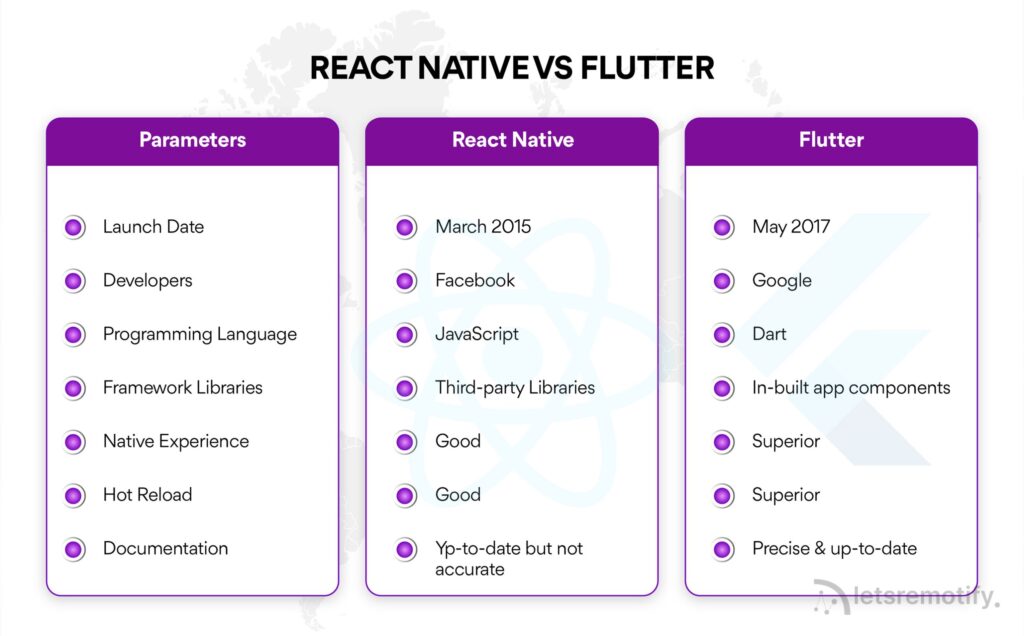
React Native builds on JavaScript and React principles. This instantly reduces fear for those who have coded websites previously. It feels like an extension rather than a brand-new world. You write components, manage state, and let the framework handle the bridge between your code and native functionality.
The initial learning curve, therefore, depends on how much React someone already knows. Those coming from vanilla JavaScript often feel a slight adjustment period. Those familiar with React can jump right in. The moment they see the app refresh live on their device, everything begins to click.
How Flutter’s Widget System Shapes The Developer Experience
Flutter, on the other hand, takes a different approach. Instead of bridging to native components as React Native does, Flutter draws everything itself using widgets. Every text, every container, every button — a widget. And somehow, this uniformity becomes enjoyable. Many developers say it feels like stacking Lego pieces, where each block has a purpose and a predictable behavior.
You quickly understand why people praise its consistency. Everything looks and behaves the same across platforms, which reduces surprises. And for some learners, predictability becomes motivation.
Comparing Performance Differences And What They Mean In Practice
Performance discussions in the react native vs Flutter debate are common. But performance is more than numbers. It’s the small, everyday interactions developers refine. Flutter’s rendering engine gives it smooth animations and reliable frame rates. React Native, relying on JavaScript, sometimes requires optimization when apps become more complex.
Still, in real projects, both frameworks handle most use cases well. Developers rarely feel bottlenecks at the beginner stage. Only when scaling to demanding interfaces do differences appear clearly.
The Development Workflow And How It Shapes Daily Coding
The workflow experience deeply affects satisfaction. Flutter’s hot reload is fast, almost instant. Developers talk about how addictive it becomes. They adjust padding, refresh, adjust color, refresh — it feels natural.
React Native offers fast refresh, too, though sometimes dependent on environment configuration. The experience stays smooth once set up properly. In daily use, both allow quick experimentation, which is crucial for learning.
Considering Ecosystems, Libraries, And Community Support
Ecosystems matter more than people initially think. React Native enters the race with JavaScript’s huge library universe. Anything you dream of — there’s probably a library for it. Flutter, though newer, has grown rapidly with well-maintained packages for UI, networking, animations, and more.
Communities for both are active. People answer questions, share snippets, and post tutorials. Learners rarely feel alone. And this support often becomes the hidden force that keeps them going.
Real-World Project Scenarios And How Each Framework Responds
Imagine building a simple storefront app. In React Native, you might use familiar patterns for lists, states, and navigation. In Flutter, you’d rely on widgets that combine clean UI with predictable behavior. The differences feel subtle at first but noticeable over time.
In slightly larger projects, architecture choices play a bigger role. State management libraries vary widely between both ecosystems, shaping how you structure your data flow. Some developers enjoy the freedom. Some prefer strict guidelines.
How Developers Describe The Transition Between Both Frameworks
An interesting part of this debate emerges from developers who switch sides. Someone starting with React Native often describes Flutter as “refreshingly structured.” Someone coming from Flutter sometimes views React Native as “comfortably open.”
These emotional reactions say a lot. They show that coding frameworks are not just technical tools — they influence how you think about building things and how you visualize solutions.
Long-Term Growth Potential And What Future Developers Consider
People often wonder where the industry is heading. While this guide avoids predictions, the growth of both frameworks remains consistent. Startups appreciate Flutter’s uniformity and performance. Companies with web roots appreciate React Native’s JavaScript foundation.
The long-term decision for learners often boils down to preference. Which coding style keeps them excited? Which environment feels natural? Whichever path they choose, they eventually grow into confident creators.
Deciding Based On Personal Learning Rhythm Rather Than Trends
Choosing technology becomes easier when you align it with how you learn. Some people need visual confirmation to stay motivated. Flutter satisfies that instantly. Others need familiarity to build confidence. React Native feels like home in those cases.
The more honest you are about your learning rhythm, the better your choice becomes.
Conclusion
The debate around react native vs Flutter isn’t about declaring a winner. It’s about understanding how different minds respond to different tools. Flutter brings structure and a unified widget system that many beginners adore. React Native offers familiarity through JavaScript and a huge ecosystem. Neither is inherently better; both are powerful paths depending on your learning style, project goals, and long-term interests. The best framework is the one that helps you stay curious, consistent, and excited to build.