
Search used to feel predictable. You’d pick a keyword, write a page, build a few links, and wait. Sometimes it worked. Sometimes it didn’t. But at least the rules felt visible. Now, that sense of clarity is gone. Rankings fluctuate without warning. Some pages never move despite solid optimization. Others climb fast and vanish just as quickly. It’s not chaos exactly, but it does feel… unsettled.
That’s why seo strategy 2026 conversations look different from anything written five or even two years ago. The focus has quietly shifted from tactics to systems. From chasing updates to building something that can absorb them. From ranking a page to earning long-term relevance. This change isn’t loud, but it’s real, and it affects everyone—from solo creators to growing companies.
Most people still approach SEO as a checklist. Titles, links, speed, content, repeat. And while those things still matter, they don’t explain why two sites doing the “same SEO” get wildly different outcomes. What’s missing is structure. Intent. A way to connect content, authority, and usefulness into something Google can trust over time.
A long term seo strategy doesn’t try to outsmart the algorithm. It tries to align with how search is evolving: more contextual, more selective, more focused on credibility than tricks. That means planning beyond individual posts and thinking in terms of ecosystems. Topic depth. Internal logic. Consistency across months, not weeks.
If you’re starting fresh or rebuilding after disappointing results, this guide is meant to give you that missing layer. Not hacks. Not promises. But a practical, modern framework you can actually follow—step by step—without feeling lost or overwhelmed.
Understanding Why SEO Strategy Looks Different Now
SEO didn’t suddenly change. It slowly grew up. Search engines began paying more attention to patterns than isolated signals. A single well-optimized page is no longer impressive on its own. What matters is how that page fits into a broader context—your site, your topic coverage, your credibility.
This shift explains why many sites experience random-looking drops. They aren’t being punished. They’re being re-evaluated. When search systems try to understand whether a site genuinely serves a topic, they look for depth, continuity, and coherence. Thin clusters, disconnected posts, or one-off content tend to lose weight over time.
The future of seo ranking is less about precision and more about trust. Trust is built through repeated usefulness through content that answers not just one question, but the next five that a user didn’t know to ask yet. Through consistency that signals, “This site actually knows what it’s talking about.”
It’s subtle. But once you see it, a lot of ranking behavior starts to make sense.
Thinking In Systems Instead Of Individual Pages
One of the biggest mindset shifts in modern SEO is moving away from page-level thinking. A page doesn’t rank in isolation anymore. It borrows strength from its neighbors. From internal links. From topical relevance. From historical performance.
This is where a modern seo framework comes in. Instead of asking, “How do I rank this keyword?”, the better question becomes, “How does this topic live on my site?” That leads to different decisions. Fewer random articles. More intentional clusters. Content that builds on itself instead of competing internally.
Many sites unknowingly sabotage themselves by publishing overlapping content without structure. Over time, search engines struggle to decide which page matters most. Rankings flatten. Growth stalls. It feels unfair, but it’s actually logical.
A system-based approach avoids this by defining roles for each page. Some pages introduce concepts. Others go deep. Some support, some convert. Together, they form something stronger than any single post.
Laying The Foundation For Sustainable Growth
Real growth in SEO feels boring at first. There’s no spike. No sudden traffic surge. Just steady movement upward. That’s the hallmark of sustainable seo growth. It doesn’t rely on temporary boosts or trending keywords. It compounds.
The foundation starts with clarity. What problem space does your site own? Not what keywords you want to rank for, but what users should associate you with. That clarity guides everything else—content topics, internal linking, even design decisions.
Many beginners skip this step and regret it later. They publish widely, then realize their authority is diluted. Fixing that is harder than starting correctly.
This is especially important when planning seo strategy for a small business in 2026, where resources are limited. You don’t need more content. You need the right content, connected in the right way.
How To Build Topic Authority Without Burning Out
Topic authority sounds intimidating, but it’s mostly about sequence. You don’t need to publish 100 articles at once. You need to publish them in a logical order. Start broad. Then narrow. Then deepen.
A common mistake is jumping straight into advanced content. It feels impressive, but it lacks support. Search engines want to see the full journey—from beginner explanations to nuanced insights.
This is where patience pays off. Sites that take the time to build from fundamentals often outperform flashier competitors in the long run because their structure makes sense.
Think of it like a library. A few random books won’t help anyone. But anorganized collection, even if smaller, feels authoritative.
Building A Scalable SEO System That Doesn’t Break
Growth introduces complexity. More pages. More links. More decisions. Without a plan, things unravel quickly. That’s why a scalable seo system matters—not just for big sites, but for anyone planning to grow.
Scalability in SEO isn’t about automation first. It’s about rules. Clear naming conventions. Consistent internal linking patterns. Defined content types. When these are in place, adding new content doesn’t create chaos.
Many teams struggle because they optimize each piece independently. Over time, the site becomes inconsistent. Users feel it. Search engines notice it.
A scalable system keeps everything aligned, even as volume increases. It’s quiet work, but it’s powerful.
Planning SEO Like A Roadmap, Not A To-Do List
Most people approach SEO reactively. Something drops, they fix it. A keyword looks promising, so they chase it. This creates movement, but not direction. A seo roadmap for beginners changes that by introducing sequencing.
A roadmap answers simple but critical questions. What comes first? What can wait? What builds on what? Without these answers, effort gets scattered.
Good roadmaps are flexible, not rigid. They adapt to performance data, but they don’t abandon structure every time metrics fluctuate. That balance is what keeps progress steady.
Step-by-Step Planning That Actually Works
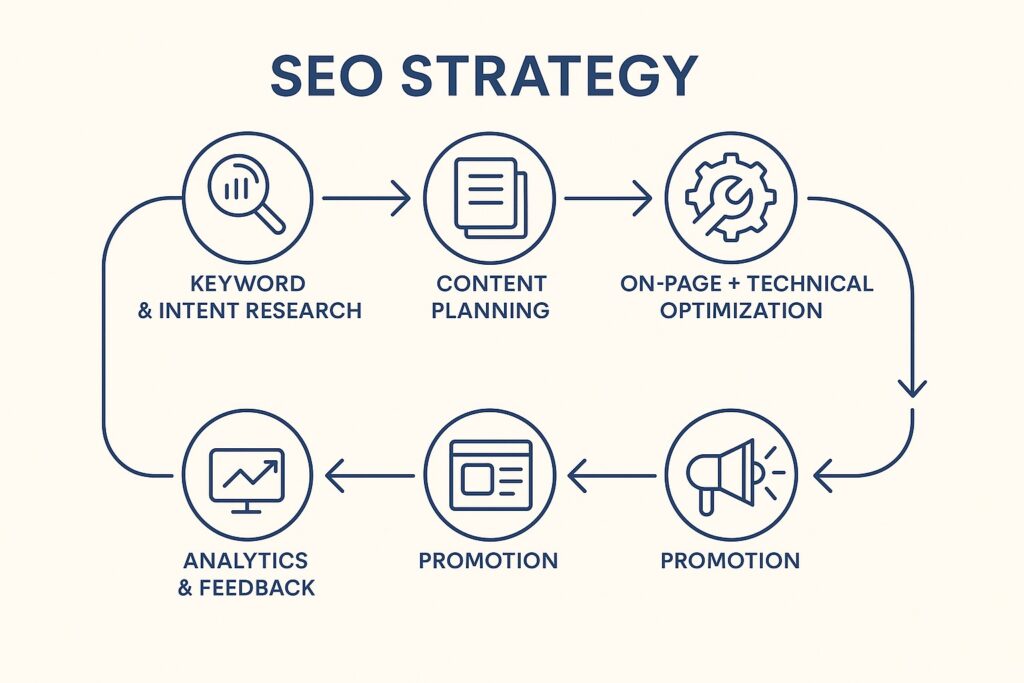
Effective SEO planning feels iterative. You plan. You execute. You observe. Then you adjust. That loop defines step by step seo planning done right. Not a one-time document, but a living process.
Early steps focus on understanding your baseline. What’s indexed. What performs. What doesn’t? Only then does optimization make sense. Skipping this leads to wasted effort.
Later steps become more strategic. Filling gaps. Strengthening internal connections. Updating older content with new context. These actions often drive more growth than publishing something new.
Designing SEO For Real Users, Not Just Crawlers
At some point, SEO stopped being separate from user experience. Pages that rank well tend to feel better to read. Clear structure. Logical flow. Depth without fluff. This isn’t accidental.
Search systems increasingly reward content that satisfies intent fully. Not partially. Not technically. Fully. That means anticipating follow-up questions. Addressing doubts. Providing examples.
When you design content for humans first, SEO often follows naturally. It’s slower, but it’s more resilient.
Measuring Progress Without Obsessing Over Rankings
Rankings still matter. But they aren’t the only signal. Traffic quality. Engagement. Indexation patterns. These often reveal more about long-term health than a keyword position.
Sites that obsess over daily movements tend to make reactive decisions. Sites that monitor trends over months make better ones. Perspective matters.
Healthy SEO growth often looks boring in the short term. But boring compounds.
Conclusion
SEO in 2026 isn’t about being clever. It’s about being deliberate. Systems beat shortcuts. Structure beats volume. Patience beats panic. When you align your site with how search actually evaluates value, growth becomes steadier—and far more defensible.
The real advantage isn’t knowing every update. It’s building something that doesn’t need to fear them.