

With new ideas, models, and applications changing industries and daily life, artificial intelligence (AI) has advanced quickly. What is agentic AI? is one of the many new concepts in the field of artificial intelligence that is attracting interest from academics, companies, and tech enthusiasts. Agentic AI is a more dynamic and independent approach than previous iterations of AI that were created just to carry out preset tasks. It can plan activities, take initiative, and modify its behavior to accomplish objectives in addition to reacting to cues.
The agentic AI definition must be examined first. Simply put, systems that exhibit agency—the capacity to decide, act with intention, and function autonomously within predetermined parameters—are referred to as agentic AI. This sets them apart from previous iterations of AI, which were highly dependent on user input and adhered to rigid, unwavering patterns. Agentic AI, on the other hand, has the flexibility and adaptability to behave more like a human.
Comparisons with different AI models—specifically, agentic AI vs generative AI—have been made possible by this progression. It’s common knowledge that generative AI can produce text, graphics, code, and even videos. It usually lacks the ability to function independently, but it excels at producing outputs based on big datasets. However, the ability of agentic AI to make decisions about what to do next gives it a critical layer that makes it proactive rather than reactive.
Because it signals the development of intelligent systems that may be able to help people more successfully in the future, the emergence of agentic AI is noteworthy. Whether in everyday applications, healthcare, education, or business, the incorporation of agency into AI systems raises ethical, responsible, and oversight concerns in addition to creating new potential.
We will go into great detail on agentic AI in this blog, including how it is defined, how it differs from generative AI, and how it may affect various sectors.
Artificial Intelligence’s Development
Turn static photos into dynamic motion with Image to Video, with a Little AI Magic. This innovative AI tool animates your images seamlessly, adding life, movement, and storytelling flair. Whether for social media or professional projects, this feature gives your visuals a cinematic edge effortlessly.
Rule-based systems, machine learning, and deep learning are the various phases of artificial intelligence. Machine capabilities expanded with each level, but the agency remained constrained. While sophisticated models could learn from data but still required user input, traditional systems could only react to predetermined rules. A new stage where autonomy starts to play a major part is represented by agentic AI.
What Agentic AI Is
One way to interpret the agentic AI definition is the development of AI systems with inherent autonomy, intentionality, and decision-making capabilities. These systems can plan tasks, carry them out, and modify their tactics in real-time rather than waiting for orders. In logistics, for instance, an agentic AI may redirect delivery during traffic jams without awaiting human orders.
Important Features of Agentic AI
The mix of proactivity, flexibility, and contextual awareness is what distinguishes agentic AI. It is capable of analyzing many situations, selecting the best course of action, and even modifying plans of action when conditions change. These characteristics enable it to efficiently replicate some elements of human decision-making.
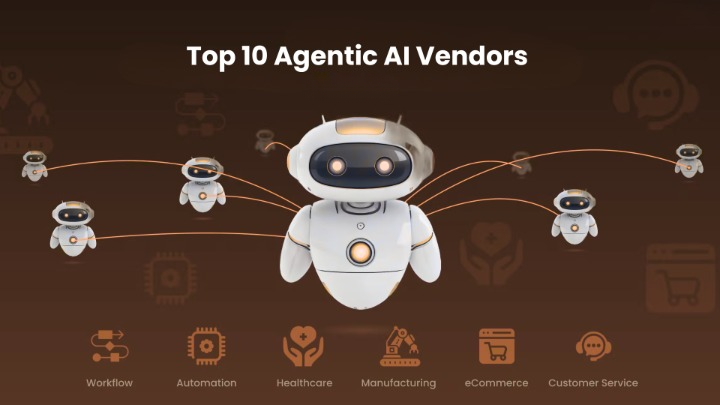
Comparing Generative and Agentic AI
The distinctions between generative AI and agentic AI become evident. Though it requires user guidance, generative AI specializes in producing outputs like essays, code snippets, or graphics. However, in addition to producing information, agentic AI may also choose when and why to provide it. It enhances generative capabilities with purpose-driven behavior.
Agentic AI Applications
Applications for agentic AI are numerous. It might automatically modify treatment programs and monitor patient data in the healthcare industry. In the financial industry, it might make deals in response to shifting market circumstances. It might modify instructional methods for certain students in the classroom. It is significantly more adaptable than previous AI systems since it can operate on its own.
Agentic AI’s Challenges
Agentic AI has several obstacles in spite of its potential. Ethics are called into question by autonomy, especially when systems make choices that have an impact on people’s lives. The question of accountability arises: who is accountable if an AI agent commits a mistake? Technical difficulties like maintaining transparency and avoiding biases are also major obstacles.
Human Cooperation With Agentic AI
The ability of agentic AI to work with people is among its most intriguing features. It can support human workers by managing complicated or repetitive decision-making activities, rather than taking their place. This collaboration may allow people to concentrate on strategy, creativity, and innovation.
Data’s Function in Agentic AI
For agentic AI to be effective, data is essential. Agentic AI needs enormous quantities of data to work, much like generative models do. The distinction, though, is in the way it leverages data—not only for content creation, but also for real-time action planning, evaluation, and decision-making.
Agentic AI’s Future
The incorporation of agentic AI into many businesses is crucial for its development. The range is extensive, ranging from self-driving cars to intelligent assistants that function as personal managers. The future generation of intelligent systems will probably be shaped by the mix of generative power and agency as AI research advances.
Regulatory and Ethical Considerations
Stronger controls are required as autonomy increases. It will be crucial to make sure that agentic AI functions within safe bounds. Transparency, privacy, accountability, and justice are issues that policies need to address. The responsible deployment of agentic AI requires appropriate oversight.
Final Thoughts
An important development in artificial intelligence is the emergence of agentic AI. Knowing the agentic AI definition and what is agentic AI enables us to recognize its differences from generative models. Although agentic AI vs generative AI demonstrates distinct differences, the two methodologies may also work in tandem. If their difficulties are properly addressed, agentic AI has fascinating prospects as technology develops. In the end, it opens the door for intelligent systems that support human advancement in a proactive rather than merely reactive manner.