

The cloud used to sound simple. That was part of the sales trick, honestly.
Move workloads. Gain flexibility. Scale faster. Pay for what you use. Smile for the PowerPoint. Then real companies showed up with actual baggage, old databases, cranky compliance teams, regional data laws, procurement delays, industry-specific paranoia, and that one department still running something critical on a Windows server nobody wants to touch because Larry set it up in 2016 and Larry now sells insurance in Pune.
That’s when the clean little cloud story started to fray.
And that fraying is exactly why Cloud 3.0: Sovereign and Hybrid Architectures is becoming such a useful way to think about where enterprise infrastructure is heading. Not as marketing fog. As a response to reality. The first cloud wave was basically “get out of the data center.” The second wave was “optimize, modernize, automate, containerize, say platform engineering a lot.” This next phase is rougher, more political, more operational, and way less glamorous. It asks harder questions. Who controls the data? Which laws apply? Where can workloads live? Who has access to encryption keys? What happens when you need public cloud speed without public cloud exposure?
That last one is where things get interesting.
Because businesses are not abandoning cloud. Not even close. They are getting pickier. They want the elasticity and tooling of hyperscalers, sure, but they also want legal control, regional residency, workload portability, lower lock-in, and clearer governance. They want to keep regulated data close, run analytics where it makes sense, push some workloads to private infrastructure, leave burst capacity in public cloud, and somehow make it all feel like one operating model instead of a pile of mismatched gears.
That, roughly speaking, is the terrain of Cloud 3.0: Sovereign and Hybrid Architectures.
And look, this is not just a European government thing or a banking thing or a defense contractor thing. It starts there because the pain is obvious there. But the pattern spreads. Healthcare. Manufacturing. Retail with cross-border operations. SaaS companies serving regulated sectors. Even mid-sized firms that suddenly realize their “cloud-first” posture turned into “vendor-first” without anybody saying it out loud.
Funny how that happens.
I remember a line from a documentary about supply chains, maybe it was about semiconductors, maybe shipping, where someone said that people only notice dependence when a system stops behaving like a utility and starts behaving like a lever. That’s cloud now. Still useful. Still powerful. Also a lever. Geopolitical, legal, commercial, architectural. Once you see that, the whole conversation shifts.
So this blog is not going to pretend every workload belongs in a sovereign cloud, or that hybrid architecture is automatically elegant. A lot of hybrid setups are a mess wearing a blazer. But the broader movement is real. Cloud 3.0: Sovereign and Hybrid Architectures is less about ideology and more about control with flexibility. Not total independence, because that’s often fantasy. Better options. Better boundaries. Better leverage.
And, maybe most of all, a more adult version of cloud.
The old cloud promise was too clean for the real world
Early cloud thinking had a kind of missionary energy to it. Leave the old world behind. Move fast. Standardize. Consolidate. The data center was old, the cloud was new, end of story.
Except no serious company operates inside an end-of-story world.
A bank in Frankfurt, a pharma firm in Boston, a public sector department in Delhi, a manufacturer outside Cleveland with a production system that cannot blink for six minutes without someone shouting across the floor, they all hit the same wall eventually. Full centralization sounds efficient until sovereignty, latency, data gravity, sector regulation, or procurement policy jams a wrench into the gears.
That doesn’t mean the cloud argument collapses. It means the argument gets less pure. And better for it.
Cloud 3.0: Sovereign and Hybrid Architectures grows out of that tension. Enterprises still want common platforms, cloud-native tooling, and scalable compute. They just don’t want to hand over every control point to one model, one jurisdiction, or one vendor relationship. Reasonable, frankly.
What Cloud 3.0: Sovereign and Hybrid Architectures actually means
The phrase can sound like something a consulting deck invented after three coffees and a workshop. Strip the jargon off, and it’s more grounded than that.
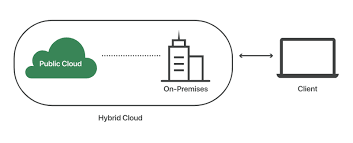
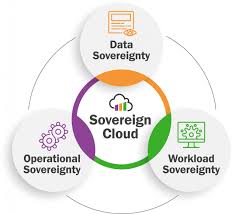
Cloud 3.0: Sovereign and Hybrid Architectures is basically a cloud model where flexibility is no longer enough. Control becomes a first-class design goal. You still use public cloud where it makes sense. You still modernize apps and automate operations. But you also design for sovereignty, meaning data control, jurisdictional awareness, policy enforcement, operational autonomy, and in some cases local ownership or access boundaries. Then you combine that with hybrid architecture, which means workloads span public cloud, private cloud, on-prem systems, edge environments, or specialized sovereign platforms.
Not one cloud. A governed estate.
That estate is messy by nature. But it reflects the way enterprises actually function. They do not wake up with a clean sheet. They inherit systems, risks, acquisitions, legal constraints, budgets, and human habits. Any architecture model pretending otherwise is basically decorative.
Sovereign cloud is not just about where data sits
A lot of people reduce sovereign cloud to data residency. Keep the data in-country. Done.
That’s too thin. Residency matters, yes, but sovereignty goes further. Who operates the environment? Who can access support systems? Which country’s laws can reach the provider? Who controls encryption keys? Can customers audit access? Can workloads move if legal conditions change? Can you ring-fence sensitive processing while still using broader cloud services elsewhere?
Those are not edge questions anymore. They are design questions.
A healthcare provider storing patient records in one place and analyzing anonymized population trends in another is making sovereignty decisions whether it uses the term or not. Same with a financial institution trying to separate customer data from AI experimentation. Same with a government agency that wants cloud economics but not strategic dependence.
This is where Cloud 3.0: Sovereign and Hybrid Architectures stops sounding theoretical. It becomes a map for dividing trust.
Hybrid architecture is back, except it never left
For years, hybrid got treated like a halfway house. Something organizations used because they were late, cautious, or tangled up in legacy systems. Public cloud was framed as the destination, hybrid as the temporary bridge.
That was a shallow read.
Hybrid stayed because reality stayed complicated. Some workloads belong close to machines on a factory floor. Some data sets are too sensitive or too entangled to move casually. Some platforms are cheaper to run privately at steady state. Some applications need public cloud services badly. Some vendors bundle capabilities in ways that make complete exit unrealistic. And some boards, finally paying attention, now ask uncomfortable concentration-risk questions that architects were muttering about years ago.
So hybrid did not lose. It matured.
Under Cloud 3.0: Sovereign and Hybrid Architectures, hybrid is not an apology. It is the actual operating model. Not always pretty. Still real.
Why sovereignty suddenly matters to executives who used to ignore it
Because control is becoming visible in financial and legal terms.
Executives can ignore abstract architectural debates for a long time. They tend to perk up when lawyers, regulators, security teams, or auditors start translating those debates into exposure. Cross-border access. Regulatory obligations. Vendor concentration. Data handling restrictions. Critical service continuity. AI governance. National infrastructure concerns.
Then the room changes.
A CIO who once just wanted migration velocity now has to answer whether the company can prove where sensitive data lives, who can access it, and how quickly services can be reconfigured if a provider relationship sours or a legal rule shifts. That is not paranoia. That is governance catching up with architecture.
And yes, there is a contradiction here. The more control you demand, the more complexity you often invite. That tension does not go away. You either manage it deliberately or let it sprawl in secret.
Public cloud is still essential, just less absolute
This is where bad takes start piling up. Some people hear sovereignty and assume the public cloud era is fading. No. That argument unravels quickly.
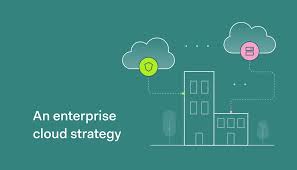
Public cloud still offers unmatched breadth in developer services, AI tooling, automation, observability, global scale, and managed platforms. It remains the fastest way for many teams to build, test, and deploy modern systems. The point of Cloud 3.0: Sovereign and Hybrid Architectures is not to retreat from that. It is to use it without surrendering every control surface.
That may mean keeping core regulated data in a sovereign environment while using public cloud for customer-facing apps. Or training AI models in one controlled domain and deploying inference closer to business operations elsewhere. Or running disaster recovery in a separate jurisdiction-aware architecture. Or containerizing workloads so migration is painful but possible rather than impossible and theatrical.
The mature question is not public cloud or not. It is public cloud for what, under which controls, and with what escape hatches.
The best hybrid designs are boring in the right places
This part gets overlooked because people love shiny architecture diagrams.
A good hybrid environment should feel boring at the policy layer. Identity should be coherent. Observability should cross environments. Networking should not behave like a cursed maze. Workload placement rules should exist for reasons people can explain without summoning three consultants and a 74-slide deck.
If your hybrid model depends on heroics, it is broken.
The glamorous side of Cloud 3.0: Sovereign and Hybrid Architectures gets the headlines, sovereign AI regions, sector clouds, confidential computing, national digital infrastructure, all that. The less glamorous side is what decides whether it works. IAM discipline. Data classification. Key management. Policy as code. Placement logic. FinOps visibility. Platform abstractions that simplify without lying.
That’s where the machinery either hums or grinds.
Data gravity is still the bully in the room
People talk about workload portability like it’s just a matter of standards and good intentions. Then they meet a massive data estate tied to analytics pipelines, compliance rules, application dependencies, historical archives, and a dozen integration points nobody fully documented.
Data gravity wins a lot of these arguments.
You can move compute around more easily than you can move large, live, regulated, business-critical data systems. Which is why Cloud 3.0: Sovereign and Hybrid Architectures often turns into a placement strategy rather than a fantasy of total mobility. Keep some data anchored. Move certain services closer to it. Push other workloads outward. Build interfaces that reduce lock-in at the application layer even when the data layer remains stubborn.
Not elegant. Useful.
AI is making sovereignty and hybrid decisions more urgent
Here’s the twist a lot of companies did not expect. AI has accelerated the sovereignty conversation.
Once organizations started experimenting with foundation models, copilots, sector-specific AI tools, and internal knowledge retrieval systems, they ran straight into familiar questions with sharper teeth. Where does the data go? Who can inspect prompts or outputs? Can regulated information be processed externally? What happens to model logs? Which environment is safe for fine-tuning? What can be anonymized, and what only looks anonymized until someone clever reconstructs the context?
That tends to sober people up.
Cloud 3.0: Sovereign and Hybrid Architectures gives enterprises a way to separate AI use cases by sensitivity rather than pretending all AI workloads fit one shared lane. Some belong in tightly controlled sovereign environments. Some can run in broader public cloud. Some should never have left a private enclave in the first place.
AI did not invent the problem. It just turned the volume up.
Multi-cloud is not the same thing, and people keep mixing them up
This confusion never dies.
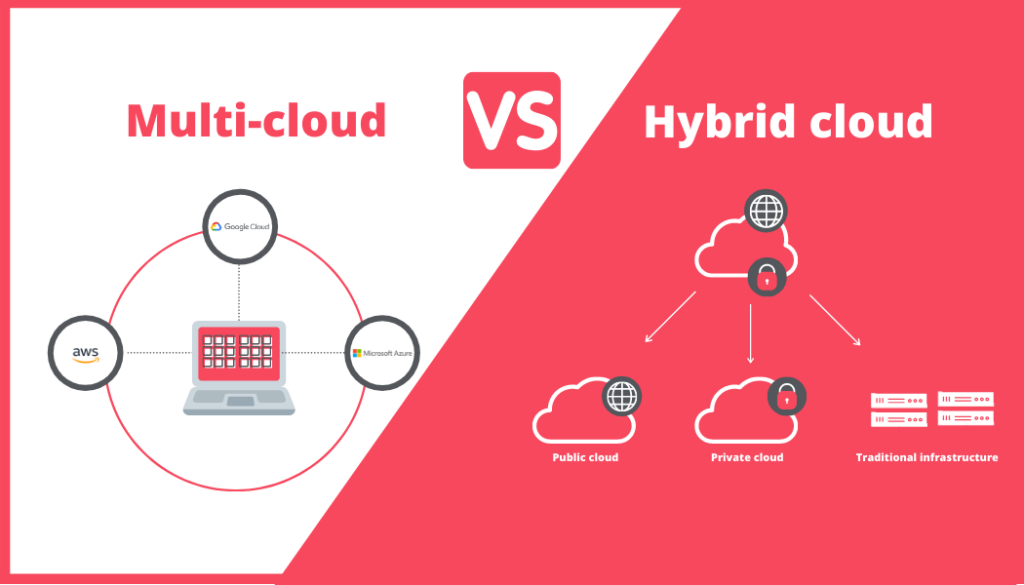
Multi-cloud means using more than one cloud provider. Hybrid means combining different types of environments, public, private, on-prem, edge. Sovereign cloud is about control, legal exposure, operational boundaries, and policy. These can overlap, but they are not interchangeable.
A company can be multi-cloud and not particularly sovereign. It can be sovereign-minded and not broadly multi-cloud. It can be hybrid without much portability. It can claim all three and still be running a chaotic patchwork held together by ticket queues and brittle scripts.
Labels are cheap. Architecture is not.
Under Cloud 3.0: Sovereign and Hybrid Architectures, the stronger organizations are the ones that stop chasing vocabulary points and start defining workload classes. What must remain sovereign? What benefits from public cloud acceleration? What stays close to operations? What can move? What probably never will? Those answers matter more than whichever badge looks best in a keynote.
The vendor lock-in argument is real, but often badly framed
People talk about lock-in like it is a moral failure. That’s not quite right. Some lock-in is the price of using advanced services that are genuinely valuable. The real issue is unmanaged lock-in. Blind lock-in. Lock-in without options, leverage, or clarity about consequences.
That is what Cloud 3.0: Sovereign and Hybrid Architectures tries to soften.
You may still commit deeply to a provider for certain services. Fine. But maybe you hold keys separately. Maybe you design data exports sensibly. Maybe you standardize app packaging. Maybe you avoid provider-specific sprawl in the most sensitive zones. Maybe your platform team draws hard boundaries where substitutability matters most.
Freedom is rarely total. Leverage can still be improved.
What a real-world Cloud 3.0 strategy looks like
Picture a regional bank. Customer transaction systems and sensitive identity data sit inside a sovereign environment with local controls, strict access boundaries, and hard audit rules. Customer-facing mobile features run partly on public cloud because release velocity matters. Analytics pipelines span both sides, with anonymization and policy controls deciding what crosses where. AI fraud models are trained in a tightly controlled domain, while less sensitive support automation lives in managed cloud services. Platform engineering builds common tooling across the estate so developers do not go mad switching mental models every hour.
That is not futuristic. That is practical.
Or take a manufacturing company with plants across multiple countries. Factory systems remain near operations because latency and continuity matter. Design collaboration tools live in public cloud. Supplier data varies by jurisdiction. Predictive maintenance models run at the edge and sync centrally. Some intellectual property gets ring-fenced in sovereign infrastructure because the board finally realized trade secrets and cloud defaults do not always mix gracefully.
This is what Cloud 3.0: Sovereign and Hybrid Architectures looks like when it leaves the keynote stage and walks into a real building.
The hardest part is not technology, it’s operating discipline
You can buy infrastructure. You can partner with providers. You can assemble reference architectures. The thing that usually derails the whole effort is discipline.
Who owns workload placement rules? Who maintains data classification? Who signs off on exceptions? Which team controls keys? How do developers request access? How are costs compared across environments? What triggers migration from one zone to another? Who audits support access? How do incident response processes change across sovereign and public domains?
If those answers live in six different heads and a SharePoint graveyard, the system will wobble.
The cloud story keeps circling back to the same truth. Architecture is only half machinery. The other half is institutional behavior. Annoying, but there it is.
Why this shift matters now
Because enterprises are done pretending one cloud posture solves every problem. The old certainty is gone. Regulation is sharper. AI is accelerating data sensitivity questions. Boards are asking about concentration risk. Customers care where data lives more than they used to. Nations care about digital infrastructure more than they used to. Vendors keep expanding, which is useful and also exactly why buyers are becoming more cautious.
So Cloud 3.0: Sovereign and Hybrid Architectures is not just a technical evolution. It is a governance evolution, a procurement evolution, a platform evolution. A grown-up cloud phase. Less romance. Better boundaries. More choices, though not always simpler ones.
That last part matters. This shift does not make infrastructure cleaner. It makes it more intentional.
Final thoughts
The cloud is not becoming less central. It is becoming less naive. That’s the real story behind Cloud 3.0: Sovereign and Hybrid Architectures. Enterprises still want scale, speed, managed services, and modern development models. They just no longer accept that those benefits must come bundled with maximum dependence, fuzzy jurisdictional exposure, or one-size-fits-all placement decisions. Sovereignty adds control. Hybrid adds flexibility. Together they create a messier, stronger model for organizations that have finally stopped treating cloud like a religion and started treating it like infrastructure.
FAQs
1. What does Cloud 3.0 mean in simple terms?
Cloud 3.0: Sovereign and Hybrid Architectures refers to a more mature cloud model where companies balance public cloud benefits with stronger control over data, jurisdiction, workload placement, and compliance. It is less about moving everything and more about placing things deliberately.
2. Is sovereign cloud the same as private cloud?
No. Sovereign cloud is about control, legal exposure, access boundaries, and governance. A private cloud may support sovereignty goals, but it is not automatically sovereign. You can have private infrastructure with weak sovereignty controls, and sovereign setups using partnered cloud models too.
3. Why are hybrid architectures becoming more important again?
Because businesses have mixed needs. Some workloads need public cloud speed, some need local control, some stay near operations, and some cannot move easily at all. Hybrid architecture fits that messy reality better than pretending everything belongs in one environment.
4. How does AI affect sovereign and hybrid cloud decisions?
AI pushes companies to think harder about where sensitive data is processed, who can access model inputs, how logs are handled, and whether certain workloads should stay in controlled environments. It makes cloud placement and governance decisions a lot more urgent.
5. Does Cloud 3.0 mean companies should avoid public cloud?
Not at all. Public cloud still matters for scale, developer services, analytics, and AI tooling. Cloud 3.0: Sovereign and Hybrid Architectures is about using public cloud with better controls, not abandoning it out of fear or fashion.
6. What is the biggest challenge in adopting Cloud 3.0?
Usually operating discipline. The technology exists, but organizations struggle with governance, data classification, access policies, workload placement rules, and ownership across teams. Without those basics, even a smart architecture can turn into a very expensive traffic jam.