
There’s something strangely comforting about standing in a forest before sunrise. The air feels thicker, cooler, quieter — almost like nature is holding its breath. And if you’ve ever drifted into a space where animals move with slow, thoughtful calm, you know the kind of peace I’m talking about. That’s the feeling people often describe when they talk about Mathigodu elephant camp — a place tucked into the Western Ghats where the forest still feels like it has secrets to share.
Even if you’re not the kind of person who plans wildlife trips or treks, there’s a different energy here that pulls you in. Not adventurous energy. Something gentler. You observe the world, instead of trying to conquer it. Elephants walk past in a way that makes you feel small but safe — like you’re in their world, and for a moment, you’re allowed to witness their routines without interrupting anything.
Most visitors don’t come here seeking luxury. They come because the forest feels like a reset button. The kind that softens your mood without you realising how much you needed it. Some arrive early, still half asleep from the drive, and suddenly discover how quiet their minds become when the only sounds are leaves rustling and water shifting somewhere in the distance. Others come with family, maybe kids who’ve only seen elephants in cartoons. And watching a child stare silently at a 3,000-kg elephant without fear — that’s a kind of purity you don’t forget.
There’s also the gentle contradiction of the place. It’s not a flashy tourist spot. Not overly marketed. Not crowded with loud signboards. Yet people keep finding their way here because someone mentions it casually or a travel blog quietly praises its calm. That’s how forest places should be discovered. Slowly. Through whispers. Through recommendations from people who felt something unexpectedly meaningful.
So let’s explore this experience — the environment, the elephants, the routines, the quiet corners, the forest moods, and the peculiar sense of grounding that stays with you long after the visit ends.
A Forest Experience That Doesn’t Try Too Hard
Some destinations feel like they’re trying to impress you. This camp isn’t one of them. The setting feels raw, untouched — almost like it grew naturally around the routines of the elephants instead of being built for tourists.
The pathways are simple. The structures blend softly with the environment. Nothing feels forced. And maybe that’s why it feels authentic. The forest isn’t choreographed; it just exists, and you get the privilege of walking through it.
The Elephants And Their Gentle Rhythm
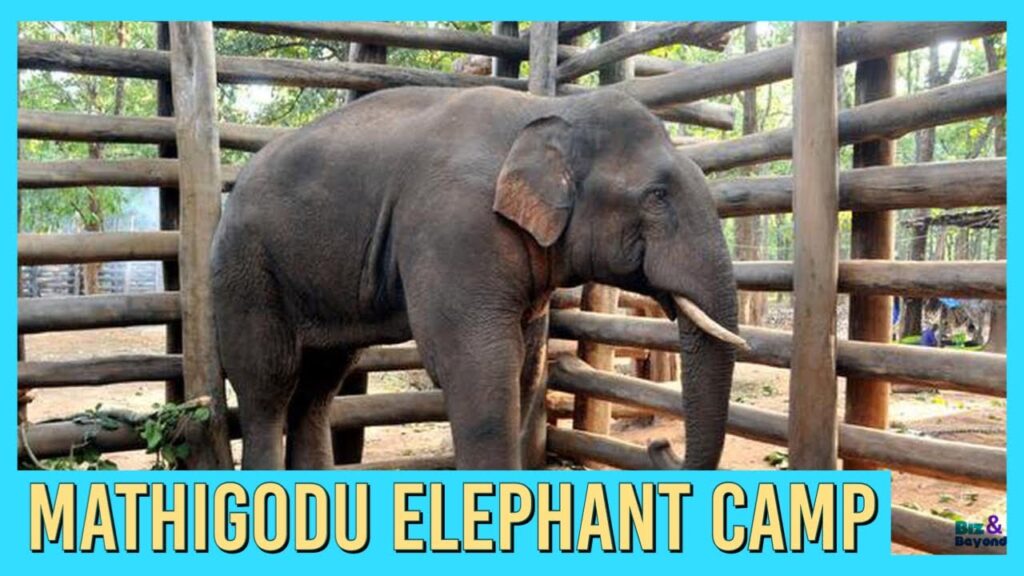
Watching elephants up close teaches you patience. Their movements, even when quick, feel slow compared to human restlessness. There’s a calm intelligence in the way they reach for water, interact with their mahouts, or simply stand still as if contemplating something bigger than us.
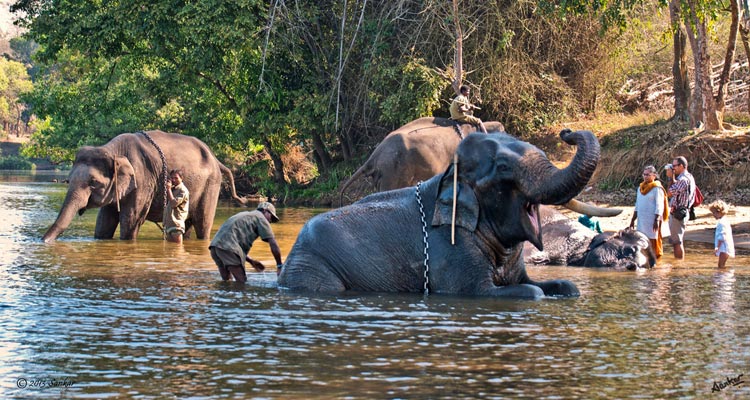
When visitors first arrive at Mathigodu elephant camp, many expect drama. But the charm lies in the opposite — in the softness. Elephants are eating quietly. Bathing in the river. Listening to their handlers’ commands with trust built over the years.
Morning Rituals That Define The Camp
Most forest camps revolve around morning routines — feeding, bathing, cleaning, and preparing for the day’s tasks. You can almost predict the sequence, yet every visit feels different because nature refuses to behave predictably.
Sometimes fog hangs low, creating silhouettes of elephants moving through white mist. Sometimes sunlight hits the river in that golden way that makes everything look cinematic. These rituals aren’t shows. They’re real, lived practices.
Mahouts And The Bond They Build Over Time
The mahouts are the quiet heroes of this world. Their connection with the elephants is built through routine, patience, discipline, and affection. You see it in the way they speak — not loudly, not harshly — but with subtle firmness.
They often share stories if you ask gently. Stories about the elephants’ moods, their quirks, their histories. You begin to realise that each elephant has a personality — playful, stubborn, affectionate, calm.
Learning To Slow Down Amid Nature
Modern life conditions us to rush. Forests do the opposite. When you stand among tall trees, listening to insects, birds, and the distant rumble of an elephant, time stretches.
Visitors often mention how they start walking more slowly. Observing more. Asking fewer questions. It’s not because guides tell them to — the forest naturally changes your pace.
Unexpected Wildlife Moments
Even though the elephants are the highlight, the region itself is alive with other creatures. Monkeys swing through branches. Birds dart across the sky. Sometimes deer appear at a distance, staring at visitors with cautious curiosity.
These side moments create a sense of layering — like the forest is offering small bonuses if you’re paying attention.
Understanding Conservation Efforts
Camps like this are not just for display. They function as part of a much larger conservation ecosystem. Training elephants, caring for rescued ones, managing forest boundaries, and supporting surrounding wildlife zones all tie into broader environmental missions.
Seeing this work up close makes you appreciate how complex wildlife management truly is.
Experiencing The Camp Beyond Photographs
People often arrive ready with cameras, eager to document everything. But something strange happens. After a few minutes, many find themselves lowering the camera and simply watching.
Sometimes the moment feels too pure to interrupt with a click. Forest silence has that effect — grounding, humbling, absorbing.
The Subtle Emotional Impact Of Leaving The Camp
Leaving a place like this always feels oddly emotional. You may not realise it while you’re there, but once you step back into regular noise — traffic, notifications, schedules — you feel the contrast sharply.
It’s like your mind had become quiet without asking for permission, and now it has to readjust. A lot of visitors mention thinking about the elephants long after they leave — the way they moved, the way they interacted, their presence.
Conclusion
A visit to Mathigodu elephant camp isn’t dramatic, loud, or overly curated. It’s gentle, quiet, and surprisingly grounding. Whether you come for the elephants, the forest, the calm atmosphere, or simply to escape routine, the experience stays with you. It softens something inside you — a reminder that nature still holds space for us, if we slow down enough to listen.