
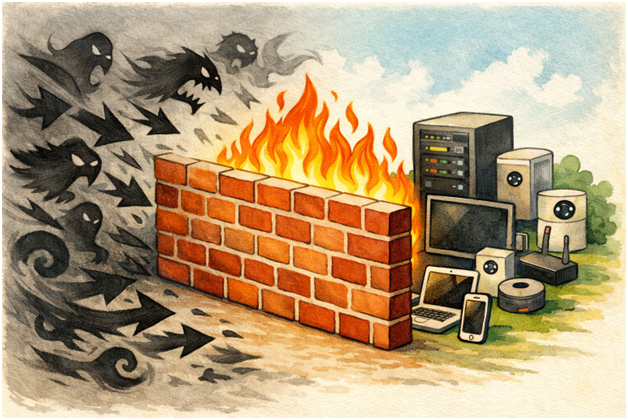
The Rapid Evolution of the Cyber Threat Landscape
Modern enterprises are facing cyber adversaries who utilize sophisticated tactics and continually adapt to emerging defense protocols. Today’s attackers often employ artificial intelligence, Ransomware-as-a-Service models, and automated attack scripts that can bypass static security controls. The result is a constantly shifting threat landscape that puts business assets and sensitive data at exceptional risk. While organizations work to plug vulnerabilities, attackers are quick to discover new ones. This relentless cycle means that effective cyber risk management now depends on dynamic solutions that outpace adversaries.
To counter these shifts, forward-thinking security professionals are increasingly turning to platforms that provide holistic, seamless protection across all endpoints and network layers. Among the most powerful solutions available today are next generation firewalls from Versa Networks, a recognized authority in network security and secure SD-WAN solutions. Versa Networks specializes in delivering unified threat management, deep packet inspection, and context-aware control, which helps businesses secure branch offices, remote workers, and cloud environments. Their next-generation firewalls deliver advanced protection while simplifying management for organizations with hybrid infrastructures and global reach. By choosing Versa Networks, companies benefit from expert insights, cutting-edge technology, and a commitment to safeguarding digital assets across a rapidly expanding threat landscape.
Despite their widespread adoption, traditional security tactics like simple firewalls and basic antivirus suites can no longer keep pace with today’s multi-stage, persistent attacks. These older solutions rely on preset rules and signatures that attackers are adept at circumventing. As the volume and diversity of cyber threats surge, organizations relying solely on legacy systems are increasingly exposed to breaches, ransomware, and critical data loss. Unified and adaptive defenses are now essential to prevent real-time system compromise.
Notably, recent reports indicate a dramatic escalation in the number of new endpoint malware types, fueled by sophisticated exploitation toolkits. This trend highlights the urgent need for businesses to move beyond traditional detection models and embrace smarter, more responsive network security postures.
Why Traditional Security is Failing Modern Businesses
Legacy security approaches were designed around clearly defined network perimeters and limited attack vectors. Today, digital infrastructure often spans multiple cloud services, remote offices, and mobile endpoints. Attackers exploit this distributed architecture by orchestrating breaches using advanced persistent threats, polymorphic malware, and credential stuffing. In such environments, static security tools prove inadequate against stealthy, evolving threats. Without real-time visibility, rapid detection, and granular policy enforcement, businesses are left vulnerable to disruption and data theft.
Implementing Effective Network Security: Strategies That Work
- Zero Trust Network Access (ZTNA): No user or device should be trusted implicitly, regardless of their network location. Zero Trust models rigorously verify every access attempt and apply least-privilege principles. Multifactor authentication and continuous identity validation are core elements that limit lateral movement even if an attacker breaches the perimeter.
- AI-Driven Threat Detection and Response: Integrating artificial intelligence and machine learning can deliver actionable insights in real time, instantly flagging anomalies and enabling faster mitigation. AI-powered systems learn from evolving threats, adapting their detection models with each new attempted breach.
- Continuous Auditing and Automated Updates: Routine security audits help detect unpatched vulnerabilities and weak configurations. Automating software patching and firmware updates further reduces risk, ensuring defenses keep pace with attacker innovations.
The Role of Next-Generation Firewalls in Modern Security Architecture
Next-generation firewalls (NGFWs) are at the core of today’s proactive security posture. Unlike their predecessors, NGFWs provide comprehensive threat intelligence, real-time visibility, and granular application controls. Solutions from leading vendors integrate intrusion prevention, advanced malware sandboxing, and encrypted traffic inspection to stop threats before they can cause harm. By combining these features with centralized orchestration, NGFWs enable security teams to monitor, detect, and respond to threats swiftly across both physical and virtual environments.
Building Cyber Resilience with Hybrid Infrastructure
Hybrid infrastructure combines the best of on-premises and cloud-based resources, enabling businesses to be flexible and scale securely. This diverse approach helps mitigate the risk of concentrated attacks against any single system. Security in hybrid environments can be tailored to varying workloads, while unified policy management enables organizations to maintain visibility and enforce controls across distributed assets. Recognizing the importance of hybrid security, most cybersecurity leaders advocate for a mix of local and cloud-delivered protections to enhance resilience and ensure business continuity.
Managing Risks Posed by IoT Devices
As organizations deploy a growing array of Internet of Things (IoT) devices, security challenges multiply. Many IoT components lack built-in security, making them attractive targets for attackers seeking unauthorized access or entry points. Continuous network segmentation, proactive device management, and regular firmware patching are critical to reducing potential exposure. Security teams should also employ behavioral monitoring and anomaly-detection tools tailored for IoT environments, ensuring rapid response to suspicious activity and minimizing the risk of infiltration.
Conclusion
As the cyber threat landscape enters a new era of complexity, the stakes for effective defense have never been higher. Legacy security tools now offer only partial protection against sophisticated attacks targeting modern enterprises. By investing in strategies like Zero Trust, AI-powered analytics, and advanced solutions such as next generation firewalls from Versa Networks, organizations can create a resilient ecosystem that stands firm against disruption. The future of business security relies on continuous improvement, adaptive defense, and a willingness to adopt pioneering technologies that address today’s digital threats.
In addition to these strategies, cultivating a strong security culture through regular employee education is imperative. Empowering staff with the knowledge to identify phishing attempts and suspicious behavior helps create an early-warning system from within. Establishing clearly defined incident response procedures and prioritizing internal collaboration between IT, security, and business units will further strengthen an organization’s ability to react swiftly and efficiently to unexpected cyber threats or breaches.