
helpful content update didn’t just shake rankings. It shook confidence. Suddenly, sites that had “done SEO right” for years were losing visibility, while others quietly climbed. No penalties. No manual actions. Just a slow, uncomfortable slide that left people guessing what Google actually wanted.
And that’s the problem. “Helpful” sounds obvious. Friendly. Almost subjective. But the way Google defines helpful content is neither emotional nor vague. It’s operational. Pattern-based. Ruthless in its own quiet way.
Most confusion came from misinformation. People blamed AI. Others blamed word count. Some assumed it was about opinions or tone. Meanwhile, Google kept repeating the same idea in different language: content should exist for users, not for search engines.
Easier said than done, right?
Because here’s the tension. You still need traffic. You still need rankings. You still need to think about keywords. The Helpful Content System didn’t remove SEO. It reweighted it. Content that exists primarily to rank now carries risk. Content that solves a problem completely, in context, tends to survive.
This guide isn’t here to repeat myths or repackage Google’s documentation. It’s here to explain how the system actually behaves in the wild. What it demotes. What it ignores. What it quietly rewards over time. And how to recover if you’ve already been hit, without burning everything down.
No scare tactics. No AI panic. Just clarity.
Why Helpful Is Misunderstood
The word “helpful” triggers instinctive reactions. People imagine friendliness, tone, maybe hand-holding. That’s not what the system measures.
The google helpful content system evaluates usefulness in aggregate. Not how nice a page feels, but whether it consistently satisfies users across a site. That’s why confusion exploded. Sites assumed individual articles were judged in isolation. They aren’t.
Another misunderstanding is thinking helpful equals long. Or detailed. Or “expert.” Those traits can help, but they’re not guarantees. Plenty of long articles get demoted. Plenty of short ones perform well.
The system looks for intent alignment, depth relative to need, and signs that the content was written because someone actually needed it. Manufactured usefulness is surprisingly easy to spot at scale.
What The Helpful Content System Actually Is
At its core, the system is a classifier. It attempts to determine whether a site primarily publishes content for people or for search performance. That’s it.
This is where google helpful content system explained often gets muddy. It’s not a page-level punishment tool. It’s not scanning sentences for “helpfulness.” It evaluates patterns across many URLs.
When a site leans heavily into templated, keyword-driven publishing, it sends a signal. When content exists just to capture queries without adding perspective or resolution, another signal fires. Over time, those signals compound.
The result isn’t a “penalty” in the traditional sense. It’s a dampening effect. Pages struggle to compete, even when technically optimized.
What The System Is Not
It’s not an AI detector. It’s not a word count checker. It’s not triggered because you used tools.
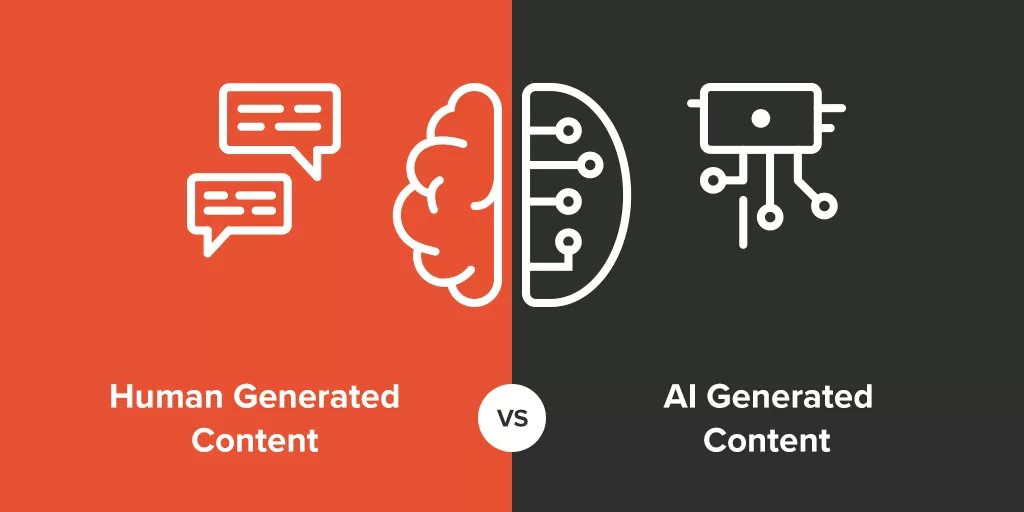
The debate around helpful content vs ai content distracted people from the real issue. Google doesn’t care how content is produced. It cares why.
AI-written content can rank. Human-written content can fail. The system responds to outcomes, not authorship. If users consistently find value, engagement follows. If they don’t, the classifier adjusts trust.
Assuming the system targets AI specifically leads to the wrong fixes.
Myths About AI Content
One of the loudest myths was that AI content is inherently unhelpful. That belief caused panic deletions and unnecessary rewrites.
In reality, google content quality signals don’t include authorship origin. They include patterns like shallow coverage, repetition, lack of specificity, and failure to satisfy intent.
AI just made it easier to produce those patterns at scale. That’s the connection people missed.
AI can also be used to create excellent content. The system reacts to results, not tools.
Signals Google Uses For Helpfulness
Helpfulness isn’t measured directly. It’s inferred.
Behavioral data matters. Do users click and stay? Do they return to search? Do they refine queries? Structural signals matter too. Is the content coherent? Does it answer the implied question fully?
This is where helpful content ranking factors overlap with content quality seo without being identical. Quality is about correctness and clarity. Helpfulness is about satisfaction.
A page can be high quality and still unhelpful if it misses the point.
Content That Gets Demoted
Patterns matter more than individual mistakes. Sites that chase every keyword variant with near-identical pages struggle. So do sites that publish content without a clear audience.
This is what unhelpful content google tends to look like. Pages that exist because “we should cover this keyword,” not because users asked for it.
Another risk pattern is excessive abstraction. Content that talks around a topic without grounding it. It reads fine. It ranks briefly. Then it fades.
Writing Helpful Content At Scale
Scale is where most sites fail. Writing one good article is easy. Writing fifty without losing intent is not.
A sustainable helpful content strategy relies on frameworks, not formulas. You need clarity on audience, problems, and depth expectations before writing begins.
This is where writing helpful content becomes less about style and more about decision-making. What not to publish matters as much as what to publish.
At scale, restraint is a ranking factor.
Recovering From Helpful Content Hits
Recovery is slow. That’s the hard truth.
People searching for how to recover from helpful content update often want a checklist. There isn’t one. Recovery happens when the classifier re-evaluates site-wide patterns.
That usually means improving or removing content that doesn’t serve a clear purpose. Not just rewriting everything. Not just adding words.
The sites that recover focus on coherence. Fewer pages. Better alignment. Clearer intent. That’s also the foundation of google helpful content update recovery in practice.
Content Pruning And Consolidation
Deleting content feels scary. But sometimes it’s necessary.
Pruning removes noise. Consolidation strengthens signals. When similar pages compete internally, trust dilutes. When they merge into one strong resource, authority concentrates.
This is where helpful content guidelines quietly point without commanding. Not everything deserves to exist. Especially if it was created just to exist.
Removing weak content can improve the perceived usefulness of what remains.
FAQs
Is the Helpful Content System a penalty?
No. Despite the term helpful content penalty, it’s not a manual or punitive action. It’s a classifier that reduces visibility when a site shows patterns of unhelpful publishing.
Can small sites be affected?
Yes. Size doesn’t protect you. Even small blogs can trigger issues if most content lacks clear purpose or audience value.
Does a helpful content checker exist?
Not really. No tool can measure helpfulness directly. Tools can highlight engagement or overlap, but interpretation still matters.
Are people-first content and SEO incompatible?
No. people first content and SEO align when intent is respected. The system rewards content that satisfies users efficiently.
How long does recovery take?
It varies. Some sites see movement in weeks. Others take months. Consistency matters more than speed.
Are there clear helpful content examples?
Yes. Pages that fully resolve a user’s question, anticipate follow-ups, and don’t overextend tend to perform well long term.
Conclusion
The Helpful Content System didn’t change what good content is. It changed how aggressively Google enforces it. Sites that write with intent, clarity, and restraint tend to win. Those chasing scale without purpose struggle. Helpfulness isn’t subjective anymore. It’s observable.