
Marketing budgets rarely feel unlimited. Most business owners and marketing managers eventually face the same uncomfortable question: should the next investment go into organic growth or paid advertising? The debate around SEO vs Google ads isn’t new, yet it feels more relevant than ever in 2026 as competition increases, ad costs fluctuate, and search behavior continues to evolve.
On paper, both channels promise visibility in search results. One requires time and consistency, the other offers immediate exposure for a price. But the real decision isn’t about speed alone. It’s about sustainability, risk, and how marketing investments perform over months rather than weeks. Some businesses rely heavily on paid traffic only to feel trapped by rising costs. Others invest in SEO too early and become frustrated by slow momentum. Sound familiar? It’s a common cycle.
What makes this choice difficult is that both channels can work exceptionally well — but often under different circumstances. A startup trying to generate quick leads may need one strategy, while an established service provider looking for long-term stability may benefit from another. The answer isn’t universal, which is why simplistic advice like “SEO is always better” or “ads are faster” misses the bigger picture.
This guide takes a practical, balanced look at how each channel functions in real business environments. You’ll see how costs evolve over time, why traffic quality differs, and where brand trust plays a bigger role than most marketers expect. You’ll also explore where SEO vs PPC 2026 decisions often go wrong, and how combining both channels can produce stronger results than choosing one exclusively.
Think of this as a planning framework rather than a strict verdict. Because in reality, the smartest marketers aren’t choosing sides — they’re understanding how each channel contributes to growth at different stages of the journey.
How SEO And Google Ads Actually Work Differently
At first glance, both channels appear similar. Users search, results appear, traffic arrives. But the mechanics behind them are fundamentally different. SEO builds visibility through relevance, authority, and content quality over time, while ads operate through bidding systems where placement depends largely on budget and optimization.
This distinction shapes everything. Organic rankings reward consistency and trust signals, while paid campaigns can change instantly based on spend adjustments. The debate around paid search vs organic search often overlooks this structural difference. One channel builds assets; the other rents attention.
A business investing in SEO is essentially creating a long-term visibility infrastructure. Content, links, and site authority accumulate gradually. Ads, on the other hand, behave more like a faucet — traffic flows when budget flows. Turn it off, and visibility disappears.
Neither approach is inherently superior. They simply operate on different timelines and risk profiles. Understanding this difference prevents unrealistic expectations later.
Cost Structure Comparison Over 12 Months
Cost is usually the first practical concern. Comparing Google Ads cost vs SEO requires looking beyond monthly expenses and considering cumulative investment.
Paid campaigns often start with predictable spending. You set a budget, traffic arrives, and conversions can be measured quickly. However, costs tend to rise as competition increases or bidding landscapes shift. Some industries experience sharp cost-per-click increases over time, turning once-profitable campaigns into tighter margins.
SEO expenses feel different. Early months involve content creation, technical improvements, and strategy development without immediate traffic spikes. But once rankings improve, ongoing costs often stabilize while traffic continues to grow. This leads to stronger long term SEO ROI for many businesses.
A simple observation from real-world patterns: businesses relying only on ads frequently find themselves paying more each year to maintain the same traffic levels. SEO investments, by contrast, often produce compounding returns.
Traffic Quality And Buyer Intent Differences
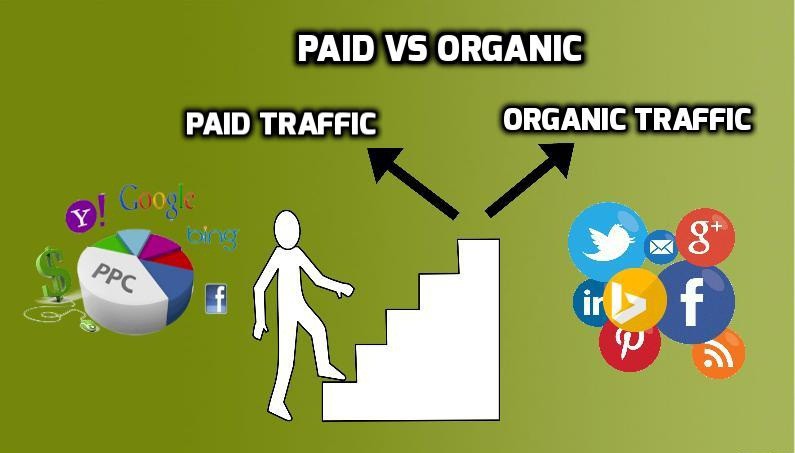
Traffic volume doesn’t always equal business value. Understanding organic vs paid traffic helps clarify why results sometimes differ even when visitor numbers look similar.
Paid search often captures high-intent users ready to act quickly. People clicking ads may already know what they want and simply choose the most visible option. This explains strong PPC conversion rates in certain industries.
Organic traffic tends to include broader intent stages. Users might be researching, comparing, or learning before making decisions. While conversion timelines may be longer, organic visitors often develop deeper trust through content interactions.
A subtle pattern appears frequently: paid traffic drives immediate leads, while organic traffic supports longer decision journeys and repeat discovery. Businesses should evaluate quality based on customer lifetime value rather than initial conversions alone.
Time To Results Short-Term Vs Long-Term Growth
Speed often drives channel decisions. Ads deliver visibility almost immediately, making them attractive for launches or urgent campaigns. SEO, meanwhile, requires patience. Results may take months to build momentum.
This contrast shapes perceptions around PPC vs SEO comparison discussions. Ads feel rewarding early, while SEO feels uncertain until rankings stabilize. Yet once momentum builds, organic visibility can continue generating traffic without proportional spending increases.
A small anecdotal observation: companies that pause SEO during early slow months often regret it later when competitors gain stronger positions. Long-term consistency tends to outperform short bursts of effort.
Think of paid ads as acceleration and SEO as infrastructure. Both matter, but they serve different growth horizons.
Brand Trust And Visibility Impact
Users often perceive organic results differently from ads. Many people still trust non-sponsored listings more, believing they’ve earned placement through relevance rather than payment. This perception contributes to SEO benefits for business beyond simple traffic.
Organic visibility builds brand familiarity gradually. Seeing a company repeatedly in search results strengthens recognition, even if users don’t click every time. Over time, this can increase branded searches and trust.
Paid ads, however, dominate visibility when competition is high or new markets are targeted. They help brands appear instantly alongside established players. The challenge is maintaining that presence without endless spending.
Trust and visibility work together. Businesses that combine consistent organic presence with strategic paid exposure often gain both credibility and reach.
Data Ownership And Dependency Risks
One overlooked factor in channel selection is dependency. Paid campaigns rely heavily on platform rules, bidding changes, and policy updates. When costs rise or accounts face issues, traffic can drop immediately.
SEO carries its own risks through algorithm changes, but the underlying asset — your website content — remains under your control. This difference affects marketing budget allocation decisions, especially for companies planning long-term growth.
Businesses heavily reliant on ads sometimes feel trapped when acquisition costs increase. Meanwhile, those investing only in SEO may struggle during slow growth periods. Diversification reduces risk on both sides.
Owning traffic sources matters. The more control you have, the more stable your growth becomes.
When PPC Is The Smarter Choice
There are clear situations where paid search wins. New product launches, seasonal campaigns, or highly competitive markets often require immediate visibility. PPC also excels when testing messaging quickly because data arrives fast.
Industries with strong PPC conversion rates and clear sales funnels can scale predictably with paid campaigns. For businesses needing leads quickly, waiting for organic rankings isn’t always realistic.
Paid ads also support market testing. Before investing heavily in SEO content, businesses can use PPC to validate demand and messaging.
The key is recognizing PPC’s strength as a rapid validation and growth tool rather than a permanent replacement for organic strategy.
When SEO Delivers Higher Lifetime ROI
SEO shines when businesses aim for sustainable growth and lower acquisition costs over time. Once rankings stabilize, traffic continues without direct cost per click, which strengthens long term SEOROI significantly.
Service businesses, educational platforms, and SaaS companies often benefit from evergreen content that attracts visitors consistently. This is where SEO benefits for business become most visible — reduced reliance on paid budgets and stronger brand authority.
SEO also supports broader visibility across informational and comparison queries, capturing users earlier in the decision process. Over time, this creates pipelines of future customers rather than immediate transactions only.
Patience is required, but the payoff can be substantial when executed consistently.
The Hybrid Strategy Most Businesses Should Use
In practice, the debate around SEO vs PPC 2026 often ends with a blend of both channels. Paid campaigns provide immediate traction while SEO builds long-term stability.
Ads can promote high-conversion pages while SEO content captures broader discovery traffic. Data from PPC campaigns often reveals valuable keywords and messaging insights that improve organic efforts, too.
This combined approach creates flexibility. When ad costs rise, organic traffic cushions performance. When SEO growth slows temporarily, ads maintain momentum.
The strongest marketing systems rarely depend on one channel alone. Integration creates resilience.
Budget Allocation Framework For 2026
Planning budgets requires realistic expectations. Early-stage businesses may allocate more toward paid campaigns for immediate visibility, gradually shifting toward SEO as organic foundations strengthen.
A practical marketing budget allocation approach considers goals, timeline, and cash flow stability. Companies seeking rapid growth may start with heavier PPC investment, while established brands often increase SEO spending for long-term efficiency.
Evaluate results quarterly rather than monthly. Both channels need time to reveal true performance trends. Avoid drastic shifts based on short-term fluctuations.
Ultimately, budget decisions should reflect business stage and risk tolerance rather than industry trends alone.
Conclusion
The choice between SEO and Google Ads isn’t about declaring one winner. Paid search delivers speed and control, while SEO builds lasting visibility and trust that compounds over time. Businesses that understand the strengths and limitations of each channel tend to make smarter investment decisions. Start by aligning channel mix with goals, timeline, and available resources, then adjust as data emerges. A balanced strategy often delivers the strongest, most sustainable growth in 2026 and beyond.
FAQs
Is SEO cheaper than Google Ads in the long run?
Often, yes, because organic traffic continues without direct click costs. However, SEO requires upfront investment and consistent effort before returns become noticeable.
Can small businesses rely only on PPC for growth?
They can initially, but dependence on paid traffic can become risky as costs rise. Combining PPC with gradual SEO investment usually creates stronger long-term stability.
How long does SEO take compared to Google Ads?
Ads can generate traffic immediately, while SEO typically takes several months to gain traction. Results depend on competition and content quality.
Do paid ads affect SEO rankings directly?
No direct ranking effect exists, but paid campaigns can increase brand awareness and traffic insights that indirectly support SEO strategies.
Which channel has better conversion rates overall?
It depends on intent and industry. PPC often captures high-intent users quickly, while organic traffic may convert over longer decision cycles.
Should marketing budgets shift toward SEO in 2026?
Many businesses are increasing SEO investment for long-term stability, but balanced strategies using both channels remain the most common approach.