
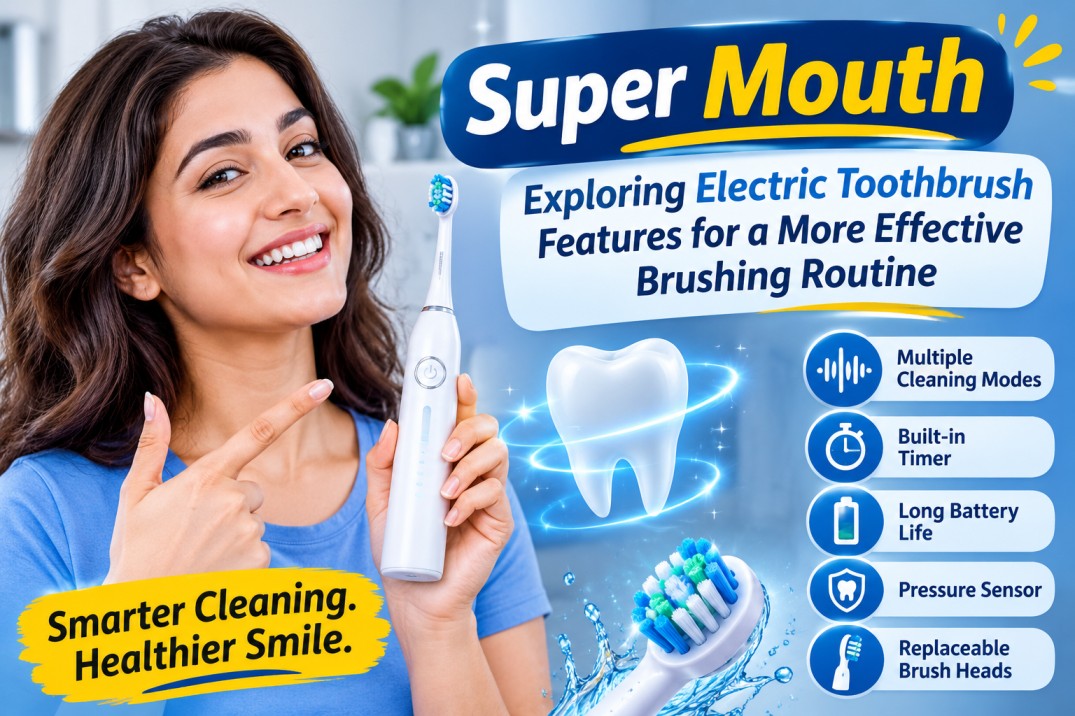
Maintaining clean teeth and healthy gums depends on consistent brushing, suitable oral care products, and proper technique. While traditional toothbrushes remain useful, electric models offer powered movements and practical features that can make everyday cleaning more structured. Super Mouth highlights the role of modern electric toothbrush technology in supporting convenient oral hygiene, giving users an opportunity to explore features that may improve their daily brushing experience. Understanding how these features work can help individuals select a suitable toothbrush and develop a routine that supports long-term dental health.
An effective brushing routine is not simply about using advanced equipment. It also involves cleaning every accessible tooth surface, applying gentle pressure, and brushing for an appropriate amount of time. Electric toothbrush features can assist with these habits when users understand how to use them correctly.
Understanding Electric Toothbrush Technology
An electric toothbrush uses a motor to move its brush head automatically. Depending on the design, this movement may involve vibration, rotation, oscillation, or a combination of different actions.
The powered movement reduces the need for users to create every brushing stroke manually. Instead, they can focus on guiding the brush around the mouth and reaching different tooth surfaces.
This can make brushing more convenient for people who find manual brushing difficult to maintain consistently. It may also help users establish a more organized approach to cleaning, particularly when they tend to rush through their routine.
However, electric movement alone does not guarantee effective cleaning. Users must still position the brush correctly, cover the outer and inner surfaces of their teeth, and pay attention to the gumline.
Built-In Timers for Better Brushing Habits
A built-in timer is one of the practical features available on many electric toothbrushes. People sometimes underestimate how quickly they finish brushing, leaving certain areas without sufficient attention.
Dental professionals commonly recommend brushing twice daily for two minutes with fluoride toothpaste. A timer can help users maintain this duration and make their routine more consistent.
Some electric toothbrushes also provide interval reminders. These encourage users to move from one section of the mouth to another rather than concentrating on the same teeth throughout the session.
For example, users can divide the mouth into four sections and spend an equal amount of time cleaning each area. This simple approach can help prevent rushed brushing and improve coverage.
A timer supports consistency, but proper positioning and technique remain necessary for thorough cleaning.
Different Brushing Modes for Individual Preferences
Modern electric toothbrushes may include multiple brushing modes designed to provide different experiences. Depending on the model, these settings can adjust the speed or pattern of brush-head movement.
A standard cleaning mode is generally intended for everyday brushing. Some devices may also include gentler settings for users who prefer a less intense brushing experience.
People with sensitive teeth or gums should choose their brushing approach carefully. A stronger setting does not automatically provide better cleaning, and excessive pressure can cause discomfort.
Users should check the specific instructions for their toothbrush to understand which modes are available and what each one is intended to do. Selecting a comfortable setting can make it easier to maintain regular brushing without irritation.
Anyone experiencing ongoing tooth sensitivity or gum discomfort should seek professional dental guidance.
Brush-Head Design and Bristle Quality
The brush head is another important part of an electric toothbrush. Its size, shape, and bristle arrangement affect how comfortably users can reach different areas of the mouth.
A smaller brush head may make it easier to clean around back teeth and reach narrower spaces. The right size depends on individual preferences and mouth structure.
Bristle softness also matters. Soft bristles are generally recommended for everyday cleaning because they can remove plaque without requiring aggressive brushing pressure.
Users should guide the brush head across the outer, inner, and chewing surfaces of their teeth. The area near the gumline also requires attention because plaque can accumulate there.
Regardless of the brush-head design, gentle movement and thorough coverage are essential parts of a good brushing routine.
Pressure Awareness and Gum Protection
Applying too much pressure while brushing can irritate the gums and contribute to enamel wear over time. Many people assume that brushing harder will produce cleaner teeth, but excessive force is unnecessary.
Some electric toothbrushes include pressure sensors that provide feedback when users press too firmly. Depending on the design, this may involve a light indicator, sound, or adjustment in brush movement.
Such features can help users become more aware of their brushing habits. However, even without pressure feedback, it is important to hold the toothbrush gently and allow its powered movement to perform the cleaning action.
Soft bristles and controlled positioning can help make everyday brushing more comfortable. People who notice bleeding or persistent gum irritation should consult a dental professional.
Rechargeable Batteries and Practical Operation
Rechargeable batteries are a common feature of modern electric toothbrushes. They allow users to power the device repeatedly without regularly replacing disposable batteries.
Charging arrangements and battery performance vary between models. Some toothbrushes are designed to remain on a charging base, while others can be used for multiple brushing sessions before requiring another charge.
A practical charging routine helps ensure that the toothbrush is ready when needed. Users should follow the manufacturer’s instructions for charging, storage, and handling.
For people who travel frequently, battery life and charging accessories may be important considerations. Checking the charge before leaving home can help avoid interruptions to the daily oral care routine.
Cleaning and Maintaining the Toothbrush
Proper maintenance supports hygienic use and helps keep an electric toothbrush in suitable working condition.
After each brushing session, rinse the brush head thoroughly with clean water to remove toothpaste residue and debris. Store the toothbrush upright in a clean, ventilated location so the bristles can dry between uses.
Brush heads generally need replacing every three to four months, or sooner if the bristles become frayed or damaged. Worn bristles may not clean as effectively and can feel uncomfortable against the gums.
Users should also clean the handle and charging components according to the manufacturer’s instructions. Avoid using cleaning methods or substances that are not recommended for the device.
Regular maintenance makes the toothbrush easier to use and helps support a consistent hygiene routine.
Combining Electric Brushing With Other Oral Care Practices
An electric toothbrush can assist with daily cleaning, but it cannot replace every part of oral hygiene. Brushing twice daily with fluoride toothpaste helps remove plaque and protect teeth, while cleaning between teeth addresses spaces that a toothbrush may not reach.
Flossing or using a suitable interdental cleaning tool can remove food particles and plaque from these areas. This is particularly important for maintaining gum health.
Dietary habits also influence dental health. Limiting frequent sugary snacks and drinks can reduce the risk of tooth decay. Drinking water regularly supports general oral cleanliness and helps clear food debris.
Regular dental checkups allow professionals to assess teeth and gums, identify potential concerns, and recommend suitable care based on individual needs.
Choosing Features That Suit Your Routine
Not every user needs an electric toothbrush with numerous settings. Some people may prefer a straightforward design, while others may value timers, rechargeable operation, or additional brushing modes.
When choosing a toothbrush, consider comfort, ease of use, brush-head availability, battery performance, and maintenance requirements. The features should make daily cleaning easier rather than complicate the routine.
People with braces, dental restorations, sensitive teeth, or specific gum concerns may benefit from professional advice before selecting a particular brush design.
The best choice is a toothbrush that feels comfortable and encourages consistent, careful brushing.
Conclusion
Electric toothbrush features can make daily oral care more structured and convenient. Timers help users maintain brushing duration, different modes can accommodate personal preferences, and rechargeable operation supports regular use. Suitable brush heads and pressure awareness can also contribute to a more comfortable brushing experience.
Super Mouth provides an opportunity to explore modern electric toothbrush options and understand how their features fit into everyday hygiene. Ultimately, an effective routine depends on using the toothbrush correctly, brushing twice daily, cleaning between teeth, and attending regular dental appointments. Combining practical technology with consistent habits can help support cleaner teeth, healthier gums, and a confident smile.