
Robots used to be very good at one thing and deeply awkward at everything else.
That was the deal. A robot arm in a car plant could weld the same seam all day with machine-like discipline, but ask it to handle a new object, shift to a different task, or adapt to a slightly changed layout and the whole performance started to wobble. Great at repetition. Bad at life. Useful, yes, but narrow in the way a toaster is useful.
That is changing.
And the change is being pushed by two ideas that belong together more than people think: Physical AI & Polyfunctional Robots. One gives machines a better grasp of the real world, meaning they can perceive, reason, and act in dynamic physical environments. The other points to the kind of machines businesses increasingly want, robots that can do more than one fixed job without being rebuilt every time operations shift. NVIDIA describes physical AI as enabling autonomous systems like robots to perceive, understand, reason, and perform complex actions in the physical world, often trained through simulation, synthetic data, and reinforcement learning.
That matters because the old industrial robotics model, while still valuable, is too stiff for a lot of modern work. Warehouses change layouts. Factories run shorter product cycles. Hospitals need flexible assistance. Retail backrooms are messy. Logistics environments are half choreography, half chaos. A machine that can only do one task well starts looking less like the future and more like a very expensive appliance.
So when people talk about Physical AI & Polyfunctional Robots, what they are really circling is a shift from rigid automation to adaptable automation. Not magic. Not fully general robot servants wandering around folding laundry and discussing philosophy. Let’s not get carried away. But definitely a move toward machines that can handle multiple functions, adapt to changing surroundings, and learn faster than the old programming-heavy model allowed.
This is also where the conversation gets slightly overhyped, because robotics people and AI people both have a weakness for grand declarations. You hear phrases like “generalist robots” or “ChatGPT moment for robotics,” and yes, NVIDIA literally framed recent advances that way when announcing new physical AI models and infrastructure meant to help developers build robots that can learn many tasks. The underlying momentum is real. The timelines, as usual, will be messier than the headlines.
Still, something important is happening.
The best way to think about Physical AI & Polyfunctional Robots is not as a sci-fi jump, but as a mechanical broadening of capability. Better perception. Better simulation. Better world models. Better sensor fusion. Better training loops. Better ways to move from one task to another without weeks of re-engineering. The machine stops being a single-purpose tool and starts becoming a flexible worker in a narrow but growing band of real-world roles.
That is a much bigger shift than it sounds.
I remember hearing a robotics engineer on a podcast compare older industrial robots to player pianos. Beautifully precise, but only as smart as the roll you fed them. That felt right. Physical AI starts replacing the roll with something more adaptive. Not consciousness. Just far more context.
And context is what the physical world has too much of.
Why robotics had to move beyond single-task automation
A lot of robotics success came from environments that were basically controlled theater. Structured lighting. Fixed lines. Known objects. Stable processes. Minimal surprises. If everything is predictable, you can get incredible efficiency from specialized machines.
The problem is that much of real work is not predictable enough.
A warehouse aisle gets blocked. A box arrives damaged. A production mix changes mid-shift. A hospital room layout is slightly different. A retail stockroom looks like three rushed decisions and a ladder. Humans handle that kind of slippage with annoying ease. Traditional robots don’t. Or didn’t.
That is why Physical AI & Polyfunctional Robots matter. Businesses want robots that can cope with friction, not just perfection. They want machines that can navigate around people, adjust grip strength, shift workflows, recognize unfamiliar layouts, and move across related jobs without a full reset. NVIDIA’s robotics material leans hard on this point, arguing that physical AI allows robots to operate in dynamic environments and that a simulation-first approach is essential for training and validation before deployment.
The old automation bargain was efficiency in exchange for rigidity. The new bargain is adaptability, even if it arrives with more complexity.
What Physical AI actually means
People hear Physical AI and sometimes imagine AI inside a robot body, which is not wrong exactly, but it is too thin.
Physical AI is about giving autonomous systems the ability to perceive the physical world, understand spatial relationships, reason about what is happening, and take actions in real time. NVIDIA describes it as extending generative AI with an understanding of the 3D world, using multimodal inputs such as images, video, text, speech, and real-world sensor data to generate insights or actions autonomous machines can execute.
That is a big deal because language AI alone does not know how friction works. It does not feel weight. It does not understand collision risk in the useful way a robot must. The physical world is rude like that. A machine can produce elegant text and still be terrible at picking up a slippery object from a conveyor belt without knocking over two other things on the way.
So Physical AI & Polyfunctional Robots go together because flexible robots need intelligence grounded in actual environments, not just digital abstractions.
What makes a robot polyfunctional
A polyfunctional robot is not merely a robot with attachments. That is part of it sometimes, but the deeper idea is broader task range.
A polyfunctional robot can handle multiple functions or job types in one operational setting, or shift between them with much less reprogramming than traditional systems typically require. Think of a warehouse robot that can move inventory, inspect shelves, and support cycle counts. Or a factory robot that can perform material handling, basic quality inspection, and part transfer across changing workflows. Or a service robot that can navigate, deliver supplies, and assist with simple interaction tasks in a hospital environment.
This does not mean endless generality. That fantasy unravels fast. The point is wider usefulness inside real operating boundaries.
And frankly, that is what businesses want. Not universal robots. Economically useful robots.
Simulation is becoming the hidden engine of all this
One of the more interesting parts of Physical AI & Polyfunctional Robots is that so much of the progress is happening before a machine ever touches the real floor.
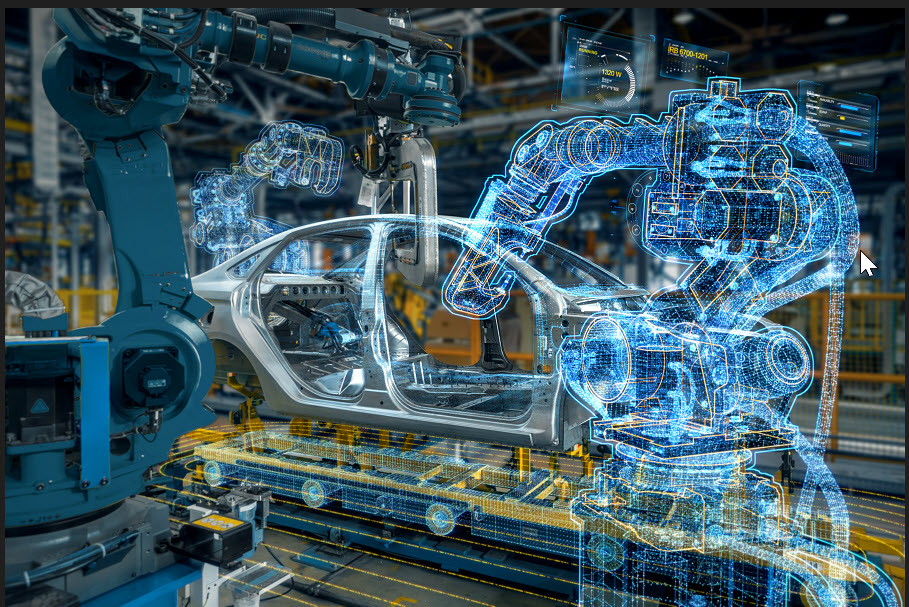
Training robots in the real world is slow, risky, expensive, and weirdly inefficient. You can’t crash expensive machines into shelves a thousand times just to improve navigation policy. You can, however, do that in simulation. NVIDIA repeatedly emphasizes physics-based simulation, digital twins, synthetic data generation, and reinforcement learning as core pieces of physical AI development. Its Omniverse tools are positioned as libraries and microservices for building industrial digital twins and physical AI simulation applications.
That matters more than most casual observers realize. The leap in robotics is not just better hardware. It is better training environments. Better ways to generate diverse edge cases. Better synthetic scenes. Better world models. Better loops between virtual learning and real deployment.
A lot of modern robotics progress is basically simulation getting good enough to teach machines how messy the world can be before the world itself gets a chance to embarrass them.
Why warehouses and factories are the first big proving grounds
Because the economics are obvious there.
Factories and warehouses already live with labor strain, repetitive workflows, safety pressures, and a constant push for throughput. They also have enough structure to make robotic deployment feasible, but enough variability to benefit from more adaptive systems. That middle zone is perfect for Physical AI & Polyfunctional Robots.
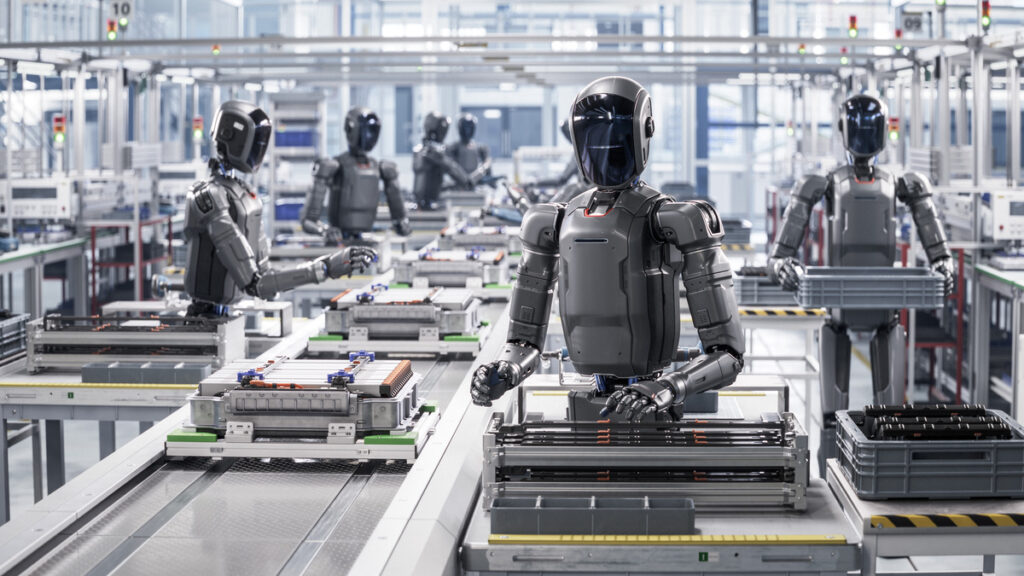
NVIDIA specifically points to autonomous mobile robots in warehouses navigating around obstacles, robot arms adjusting grasping strength based on object pose, and smart spaces using vision AI to improve routing and safety in factories and warehouses.
And look, this is where the hype gets grounded. A polyfunctional robot that saves a warehouse from needing three different narrow systems is compelling. A robot that can support multiple production-adjacent tasks on a factory floor without constant reconfiguration is compelling. That is not because it looks futuristic. It is because it can make the math work.
The board does not care if the robot seems clever. The board cares if the payback period makes sense.
Humanoid robots get the attention, but they are not the whole story
Humanoids suck up an absurd amount of oxygen in this conversation. Some of that is fair. The form factor is intuitive. If human environments are designed for human bodies, a human-shaped robot can in theory slot into existing spaces with fewer infrastructure changes.
But Physical AI & Polyfunctional Robots are bigger than humanoids.
Mobile manipulators, autonomous carts, robotic arms with flexible perception, inspection bots, delivery robots, collaborative robots, and semi-general industrial systems all belong in this conversation too. NVIDIA’s robotics messaging spans not just humanoids but manipulators, mobile robots, smart spaces, and autonomous systems more broadly.
Sometimes the most commercially useful robot is not the one that looks the most like us. It is the one that quietly does three annoying jobs no one wants to stitch together with human labor and brittle legacy systems.
The real breakthrough is task transfer
This, to me, is the heart of it.
A robot that can do one task well is useful. A robot that can learn a second related task faster because of what it already knows is something else. That is where Physical AI & Polyfunctional Robots start to feel like a platform shift rather than a product category.
NVIDIA’s 2026 announcement explicitly talked about helping build “generalist-specialist robots” that can quickly learn many tasks. That phrase is awkward and kind of perfect. General enough to transfer skills. Specialized enough to be reliable in real settings.
That is probably where the field is actually headed. Not one robot for everything, but robots with transferable competence across clusters of tasks. Pick, place, inspect, carry, navigate, sort, reposition, assist. Narrow generality, basically. Which sounds contradictory because it is, and it still makes sense.
Why this changes the economics of automation
Old automation often required high volume and high stability to justify cost. The robot did one thing, the line stayed fixed, the output was predictable, and the economics worked because the use case barely moved.
Polyfunctional systems change that equation.
If one robot can cover multiple functions, adapt across shifts, and stay useful even as workflows evolve, the value story gets wider. Suddenly robotics becomes interesting to operations that are too variable for fixed-function machines but too repetitive to leave entirely manual. Smaller manufacturers start paying attention. Mid-sized logistics operators start paying attention. Healthcare systems start paying attention.
This is where Physical AI & Polyfunctional Robots become less about frontier spectacle and more about labor design. Not replacing all human work, despite the dramatic takes, but absorbing repetitive, dangerous, physically draining, or operationally awkward tasks across more settings.
That does raise a real tension, though. Flexibility can increase value, but it also increases expectations. A company may buy a robot for five tasks and then discover it performs beautifully on two, decently on one, and terribly on the other two without more integration work. That tension is going to sit there for a while.
The hardware still matters more than AI people sometimes admit
AI gets the glamour. Hardware gets the back pain.
But with Physical AI & Polyfunctional Robots, actuators, sensors, battery life, grippers, materials, drive systems, force control, thermal limits, and maintenance still decide a lot of what is practical. A beautiful world model does not help much if the gripper can’t handle varied objects reliably. Fancy reasoning does not rescue poor battery economics on long shifts. Great perception does not eliminate wear-and-tear in harsh industrial settings.
This is why robotics progress feels slower than pure software progress. The world keeps charging rent.
So yes, AI is unlocking more autonomy and flexibility. But the machine still has to survive floors, dust, friction, collisions, payload variation, and real human environments that do not care about your benchmark scores.
Physical AI is making robots less scripted and more situational
That might be the cleanest summary.
Traditional automation leaned heavily on scripting and fixed programming. Physical AI pushes robots toward situational behavior. Perceive what is here. Understand what changed. Plan what to do next. Act with feedback. Learn from variation. NVIDIA describes physical AI as enabling robots to sense, reason, and act in real time, and highlights reinforcement learning plus synthetic data as ways to build these skills safely and at scale.
This is why the leap feels so substantial. The machine is not just following instructions. It is operating inside a bounded interpretation of the world.
Not human-like. Let’s not get sentimental. Just less brittle.
What industries will feel this first
Warehousing and manufacturing, almost certainly. Smart spaces too, including factories and logistics hubs where cameras, robots, and analytics systems can coordinate movement and safety. NVIDIA also points to applications in autonomous vehicles, smart spaces, surgery, and warehouses as physical AI capabilities expand.
Healthcare could be significant, especially for internal logistics, delivery, support, and controlled assistive tasks. Retail and hospitality may follow, though those environments can be socially messy in ways robotics people sometimes underestimate. Construction and field service are harder, but interesting. Agriculture, same story.
The first broad commercial wins will likely come where task clusters are repetitive enough to automate, variable enough to need flexibility, and expensive enough to justify investment.
That is the sweet spot.
Why the next few years matter
Because the tooling stack is getting real.
Between digital twins, world foundation models, robotics simulation platforms, synthetic data pipelines, and increasingly capable robot hardware, the ingredients for Physical AI & Polyfunctional Robots are aligning more clearly than before. NVIDIA’s recent announcements around Cosmos, Omniverse, Jetson, open models, and physical AI infrastructure show how seriously the ecosystem is being built around robotics development and deployment.
That does not guarantee smooth adoption. Enterprises are still enterprises. They will overbuy in some places, hesitate in others, and discover integration pain in all the usual corners. But the stack is maturing. And once the stack matures, experimentation gets cheaper, deployment gets faster, and the argument for trying robotics in more workflows gets harder to dismiss.
Which is how real shifts happen. Not all at once. Then suddenly everywhere.
Final thoughts
Physical AI & Polyfunctional Robots are not just a shinier version of old automation. They point to a more adaptive robotics era, one where machines can perceive, reason, and act in the physical world with enough flexibility to handle multiple useful tasks instead of a single scripted routine. That is a big deal for factories, warehouses, healthcare, and any environment where work is repetitive but never perfectly repeatable. The hype will overshoot in places, obviously. It always does. But the core movement is real: robots are becoming less like fixed tools and more like operational systems with growing range, and that changes the entire automation conversation.
FAQs
1. What is Physical AI in simple terms?
Physical AI refers to AI that helps machines understand and act in the real physical world. It combines perception, reasoning, sensor input, and action so robots and autonomous systems can handle dynamic environments more effectively.
2. What are polyfunctional robots?
Polyfunctional robots are robots designed to perform multiple useful tasks instead of just one narrow, fixed job. They may switch between related functions like moving, picking, inspecting, or assisting, which makes them more flexible in changing work environments.
3. Why are Physical AI and polyfunctional robots being discussed together?
Because flexible robots need better physical understanding to do more than one task well. Physical AI & Polyfunctional Robots fit together naturally, since adaptable multi-task machines depend on better perception, reasoning, simulation, and real-world interaction.
4. Which industries will benefit most from Physical AI & Polyfunctional Robots?
Warehousing, manufacturing, logistics, healthcare, and smart industrial spaces are likely to benefit first. These settings combine repetitive workflows with enough real-world variability that more adaptive robots can offer stronger value than older fixed-function machines.
5. Are polyfunctional robots the same as humanoid robots?
No. Humanoid robots are just one possible form. Polyfunctional robots can also be mobile manipulators, robotic arms, collaborative robots, delivery robots, or other systems that handle multiple tasks without needing a human-like body shape.
6. What is the biggest challenge in making Physical AI & Polyfunctional Robots practical?
The hardest part is combining strong AI with reliable real-world hardware and affordable deployment. Simulation, synthetic data, and better models help a lot, but batteries, grippers, sensors, maintenance, and workflow integration still decide what works outside demos.