
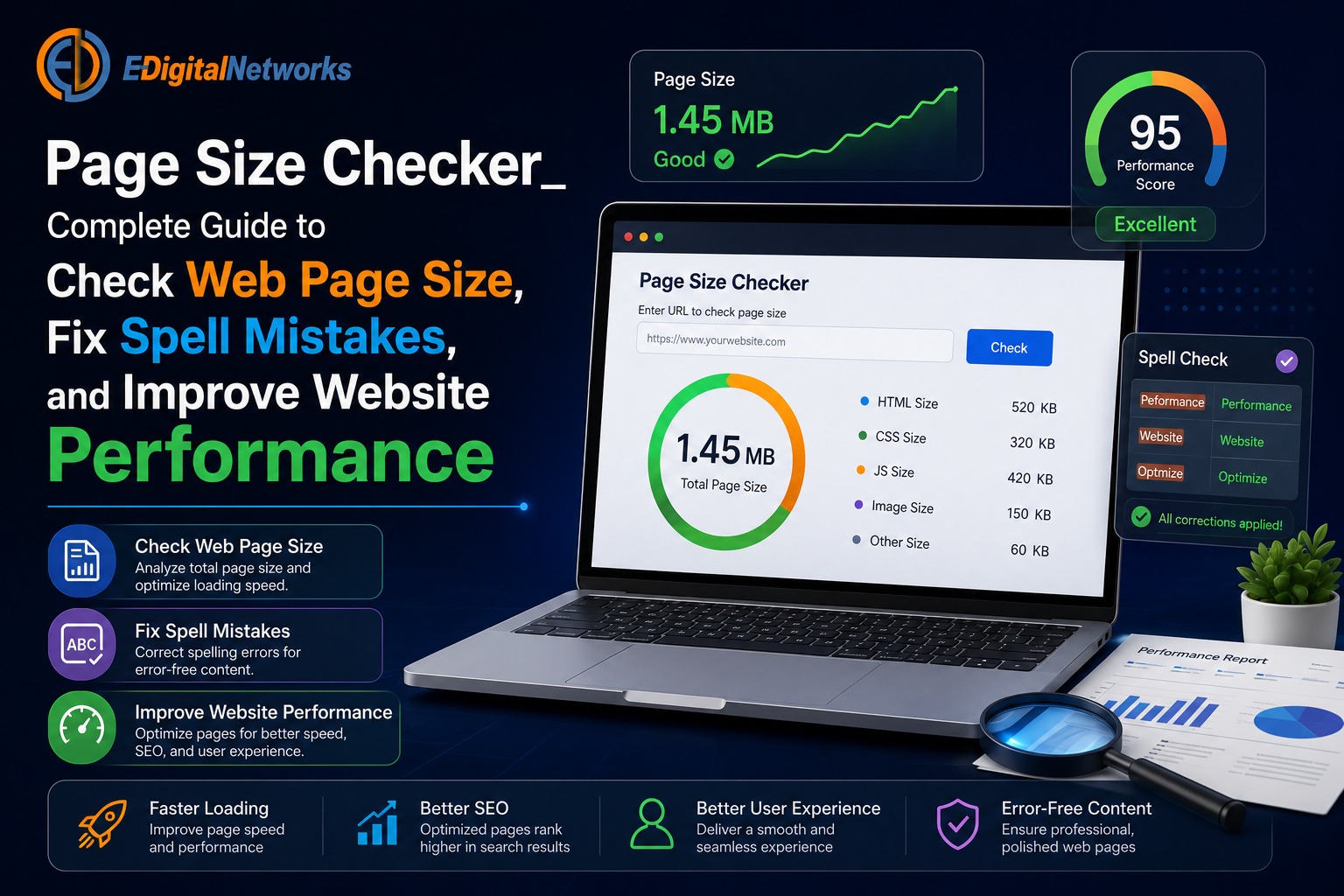
Website speed has become one of the biggest ranking factors for search engines and an important part of user experience. Whether you run a blog, business website, online store, or portfolio, using a page size checker, website page size checker, web page size test, page load speed, website performance test, spell checker online, spell mistake checker, grammar checker, SEO tools, and website optimization can help improve loading speed, readability, and overall search rankings. A lightweight page combined with error-free content creates a professional impression while reducing bounce rates and increasing visitor engagement.
A website may have attractive visuals and excellent content, but if it takes too long to load or contains spelling errors, visitors are likely to leave before exploring further. Modern users expect websites to load within a few seconds, and search engines reward websites that provide a fast and seamless browsing experience.
Similarly, spelling mistakes reduce credibility. Even a single typo on an important landing page can affect trust, conversions, and brand reputation. This is why experienced website owners regularly use page size checking tools along with spelling and grammar checkers before publishing new content.
Fortunately, several online tools make this process quick and simple. By checking your page size, optimizing heavy resources, and correcting spelling mistakes, you can significantly improve your website’s overall quality without requiring advanced technical knowledge.
What Is a Page Size Checker?
A page size checker is an online utility that measures the total size of a webpage by calculating all the files required to display it properly. These files generally include HTML documents, CSS stylesheets, JavaScript files, images, fonts, videos, and other downloadable resources.
Using a page size checker helps website owners understand how much data visitors need to download before a page becomes fully visible. Larger pages generally take longer to load, especially on slower internet connections or mobile devices.
A webpage that looks simple may actually contain several large images, multiple JavaScript libraries, advertising scripts, and tracking codes working in the background. These hidden elements often increase loading time more than website owners realize.
Regular testing helps identify pages that have become unnecessarily heavy after adding plugins, widgets, videos, or high-resolution graphics. Once these elements are identified, optimization becomes much easier.
Modern page size tools usually provide additional insights such as total requests, file breakdowns, compression status, and loading recommendations. This information allows developers and website owners to improve both speed and user experience.
Even small improvements in page size can noticeably reduce loading times, particularly for users browsing on smartphones or slower mobile networks.
Why Website Page Size Matters for SEO
Search engines consider several performance signals while ranking websites, and page size directly influences many of them. A smaller webpage generally loads faster, creating a better browsing experience for visitors while supporting improved search visibility.
Using a website page size checker allows you to identify unnecessary resources that increase loading time. By reducing these elements, websites often become more responsive across desktops, tablets, and smartphones.
Faster loading pages encourage users to remain on a website longer. When visitors find information quickly, they are more likely to explore additional pages instead of returning to search results.
Large webpages also consume more bandwidth. This becomes particularly important for users with limited mobile data plans or slower internet connections, where every additional megabyte increases waiting time.
Google has repeatedly emphasized the importance of website performance. Although page size alone is not the only ranking factor, optimizing page resources contributes significantly to faster loading speeds and better Core Web Vitals.
Website owners who regularly monitor page size are usually able to detect performance issues before they begin affecting visitor satisfaction and search engine rankings.
How a Web Page Size Test Works
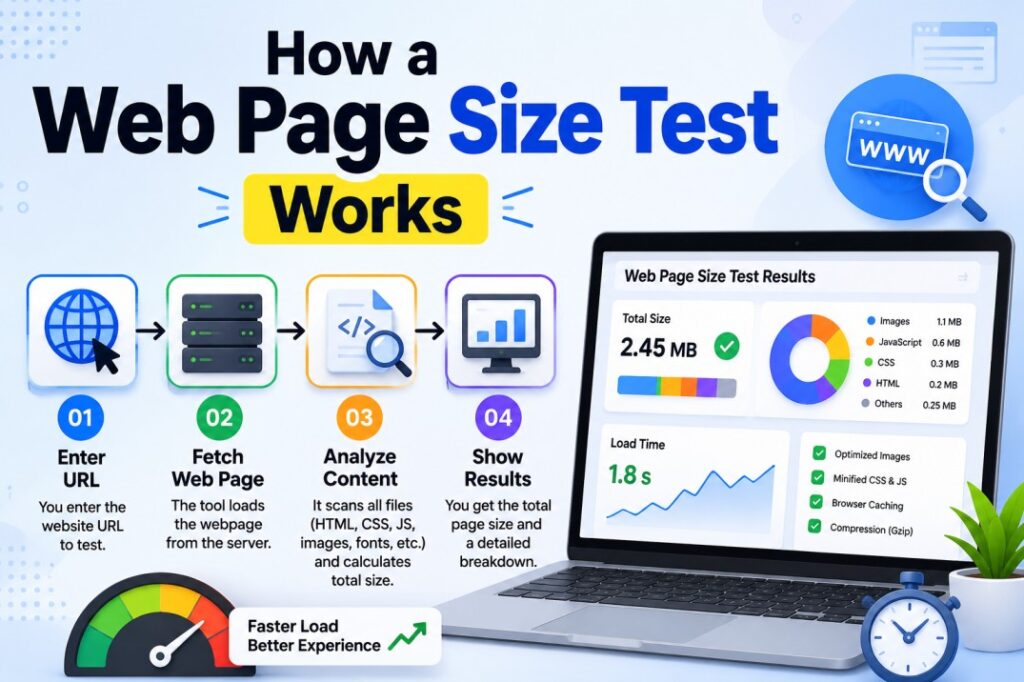
A web page size test begins by requesting a webpage just as a normal visitor’s browser would. The testing tool downloads every required resource and calculates the combined size needed to display the page correctly.
During a web page size test, each component is measured separately. HTML files, style sheets, JavaScript resources, fonts, images, videos, icons, and external scripts are all included in the final calculation.
The report often shows how many files are being requested from the server. A webpage containing hundreds of separate requests usually takes longer to load than one containing fewer optimized files.
Many advanced testing tools also identify resources that could benefit from compression or caching. These recommendations help reduce loading time without changing the visual appearance of the website.
Some tools simulate different internet speeds, allowing website owners to understand how their pages perform for users on mobile networks, broadband connections, or slower internet services.
After reviewing the results, developers can prioritize improvements that provide the greatest reduction in page size while maintaining website quality and functionality.
Common Reasons Why Web Pages Become Too Large
Many website owners unintentionally increase page size while adding useful features. Over time, these additions accumulate and begin affecting website performance.
High-resolution images are among the biggest contributors to excessive page size. Uploading photographs directly from modern smartphones or professional cameras without compression often increases loading time dramatically.
Videos embedded directly into webpages can also consume significant bandwidth. Hosting large media files externally or optimizing video delivery helps reduce the amount of data users need to download.
Unnecessary plugins frequently load additional JavaScript and CSS files on every page, even when their features are not being used. Removing unused plugins often produces immediate improvements.
Poorly optimized themes sometimes include animations, sliders, icon libraries, and design elements that require large amounts of code. Simplifying these resources reduces page size without sacrificing usability.
External advertisements, tracking scripts, social media widgets, and marketing integrations also increase page weight. While these services provide useful functionality, they should be implemented carefully to avoid slowing down the website.
Regular website maintenance helps prevent unnecessary resource growth and keeps page performance consistent as the website continues expanding.
Why Spell Mistakes Can Hurt Your Website Performance
Publishing content with spelling mistakes may appear to be a small issue, but it can have a noticeable impact on user trust and engagement. Visitors often associate accurate writing with professionalism, making error-free content an important part of building credibility online.
Using a spell mistake checker before publishing articles, landing pages, or product descriptions helps identify typing errors that may otherwise go unnoticed. A reliable spell mistake checker can detect common mistakes, suggest corrections, and improve the readability of your content within seconds.
Search engines are designed to understand minor spelling variations, but readers may not be as forgiving. Frequent spelling mistakes can distract users from your message and reduce confidence in your website or brand.
Business websites, educational portals, and eCommerce stores especially benefit from clean and accurate writing. Well-written content communicates authority and encourages visitors to spend more time exploring additional pages.
Content accuracy also supports better user engagement. Readers are more likely to share, bookmark, and recommend articles that are informative and professionally written without unnecessary spelling errors.
Regular proofreading, combined with automated spelling tools, creates a strong publishing workflow that minimizes mistakes and improves the overall quality of your website.
Benefits of Using an Online Spell Checker
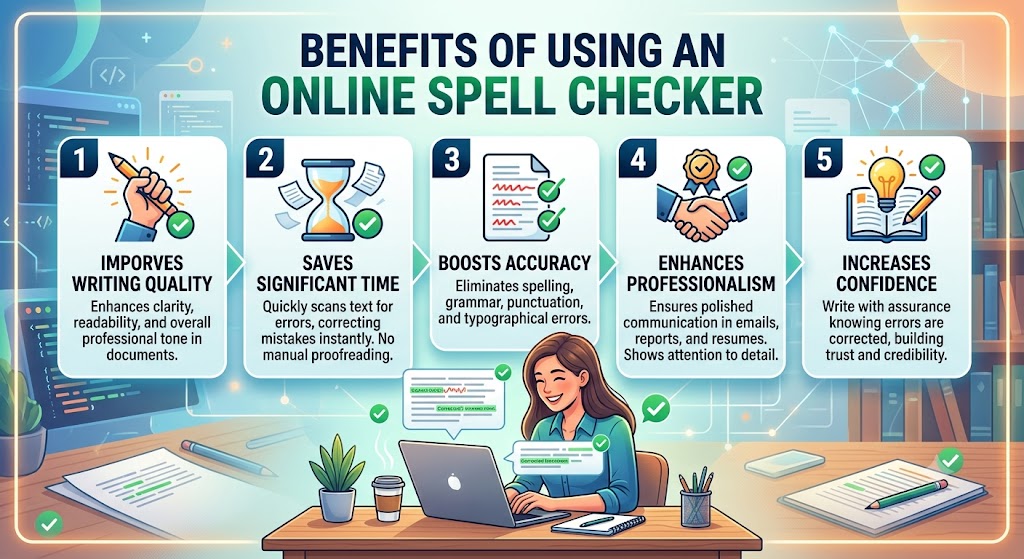
An online spell checker online tool saves time by automatically reviewing your content for spelling errors before it is published. Instead of reading every sentence repeatedly, writers can quickly identify mistakes and make corrections with confidence.
Modern spell checker online tools do much more than highlight incorrect words. Many platforms also recognize contextual spelling issues, capitalization errors, repeated words, and common typing mistakes that traditional word processors may overlook.
These tools are especially useful for bloggers, students, marketers, copywriters, and business owners who publish content regularly. Faster proofreading allows more time to focus on research, creativity, and improving the value of each article.
Online spell checking also supports consistency across large websites with multiple contributors. Maintaining uniform language quality helps strengthen a brand’s professional image and improves reader satisfaction.
Many cloud-based tools work directly inside browsers, making them convenient for editing blog posts, emails, website pages, and social media content without installing additional software.
Even experienced writers occasionally make typing errors. Automated spell checking acts as an additional layer of quality control before content reaches readers.
How Grammar Checkers Improve Content Quality
Good spelling is only one part of effective writing. Grammar, punctuation, sentence structure, and clarity also influence how readers understand your content. This is where a grammar checker becomes extremely valuable.
A reliable grammar checker analyzes complete sentences instead of individual words. It identifies grammatical mistakes, awkward phrasing, punctuation errors, and readability issues that may reduce the overall quality of your writing.
Clear grammar improves communication by making ideas easier to understand. Readers can follow your content more comfortably, resulting in longer session durations and better engagement across your website.
Grammar checking is particularly useful for websites targeting international audiences. Well-structured English improves accessibility and creates a more professional impression regardless of the reader’s location.
Content creators who publish frequently often develop habits that lead to repeated grammatical mistakes. Regular grammar analysis helps identify these patterns and gradually improves overall writing skills.
Combining grammar checking with careful proofreading creates polished content that reflects positively on your brand while providing visitors with a smoother reading experience.
How Page Size Affects Website Loading Speed
One of the strongest connections in website optimization is the relationship between page size and page load speed. Larger webpages generally require more data to be downloaded before visitors can begin interacting with the content.
Monitoring page load speed helps website owners identify whether large images, excessive scripts, or unnecessary resources are slowing down the browsing experience. Small improvements across multiple pages often produce significant gains in overall website performance.
Fast-loading websites encourage visitors to remain engaged instead of abandoning pages because of delays. This contributes to lower bounce rates, increased conversions, and improved customer satisfaction.
Mobile users benefit even more from optimized page sizes. Since many visitors browse using smartphones on varying network speeds, lightweight webpages provide a smoother experience across different devices.
Caching, image optimization, code compression, and resource minification all contribute to faster page loading without affecting visual quality. These techniques reduce unnecessary data transfer while maintaining website functionality.
Website speed should be monitored regularly because new plugins, design changes, and content updates can gradually increase page size over time.
Website Performance Testing: More Than Just Speed
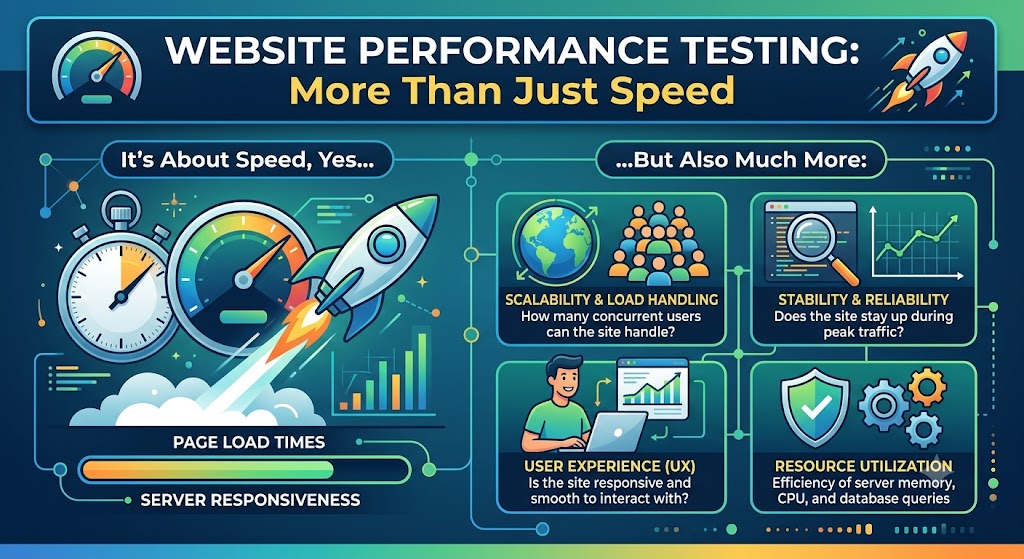
Many website owners believe performance testing only measures loading time, but a complete website performance test evaluates several important technical factors that influence user experience and search visibility.
A comprehensive website performance test examines server response time, page size, resource requests, browser caching, compression, image optimization, and script execution. Together, these measurements provide a clearer understanding of how efficiently a website performs.
Performance reports often highlight bottlenecks that may not be obvious during normal browsing. Third-party scripts, advertising networks, tracking tools, and large multimedia files commonly contribute to slower page rendering.
Regular testing also helps compare improvements after website updates. Measuring performance before and after optimization allows developers to confirm whether changes have produced the expected results.
Business websites especially benefit from continuous monitoring because even small delays can reduce customer engagement and affect sales or lead generation.
Consistent performance testing supports long-term website growth by ensuring that new features do not gradually reduce loading speed or create unnecessary technical issues.
Best Website Optimization Techniques for Faster Performance
Improving website speed is not about making one major change. It involves applying several small optimizations that work together to create a faster and smoother browsing experience. Using effective website optimization techniques consistently helps maintain excellent performance as your website continues to grow.
A reliable website optimization strategy begins with image compression. Large images often account for the biggest portion of page size, so converting them into modern formats and compressing them without visible quality loss can significantly reduce loading time.
Minifying CSS, JavaScript, and HTML files is another proven method for improving speed. Removing unnecessary spaces, comments, and unused code decreases file size while preserving the functionality of your website.
Browser caching also plays an important role. By allowing frequently used resources to be stored on visitors’ devices, websites load much faster when users return to browse additional pages.
Content Delivery Networks, commonly known as CDNs, distribute website files across multiple global servers. This reduces the physical distance between visitors and website resources, resulting in quicker loading speeds around the world.
Regularly updating plugins, themes, and website software helps improve both performance and security. Developers often release updates that optimize code, reduce resource usage, and fix issues affecting loading speed.
Finally, monitor your website every month instead of only after major redesigns. Continuous optimization prevents performance issues from accumulating over time.
Why SEO Tools Are Essential for Modern Websites
Search engine optimization involves much more than choosing the right keywords. Professional SEO tools help website owners monitor technical health, improve content quality, and identify opportunities for better search rankings across competitive industries.
Using trusted SEO tools allows you to analyze page speed, identify broken links, monitor keyword performance, detect duplicate content, and evaluate overall website health. These insights support informed decisions rather than relying on assumptions.
Many SEO platforms also integrate page speed reports, mobile usability testing, and technical audits into a single dashboard. This saves time while providing a complete picture of website performance.
Keyword tracking helps content creators understand how articles perform over time. If rankings begin to decline, website owners can update content, improve page speed, or strengthen internal linking strategies.
Technical SEO audits identify hidden issues that visitors may never notice but search engines can detect. These include crawl errors, indexing problems, missing metadata, and structured data improvements.
When combined with a page size checker and proofreading tools, SEO software creates a complete workflow for publishing faster, more accurate, and better-optimized content.
Frequently Asked Questions About Page Size Checker and Spell Mistakes
Many website owners have similar questions when trying to improve performance and content quality. Understanding these common concerns can help you make better optimization decisions.
What is the ideal webpage size?
There is no universal limit, but keeping pages as lightweight as possible generally improves loading speed, especially for mobile users.
How often should I use a page size checker?
Testing your important pages after every major update or content change helps ensure performance remains consistent.
Can spelling mistakes affect SEO?
Minor spelling mistakes are unlikely to cause major ranking problems, but they can reduce user trust, readability, and engagement, which indirectly affects overall website performance.
Should I use both spell and grammar checkers?
Yes. Spell checkers identify incorrect words, while grammar checkers improve sentence structure, punctuation, and readability. Together they produce more professional content.
Do page size checkers improve website speed automatically?
No. They analyze your webpage and identify performance issues. You still need to apply the recommended optimizations to reduce page size and improve loading speed.
Final Thoughts
Building a successful website requires balancing technical performance with high-quality content. A fast-loading page keeps visitors engaged, while accurate spelling and grammar strengthen credibility and improve the overall reading experience.
Using tools such as a page size checker, website page size checker, web page size test, page load speed analyzer, spell checker online, spell mistake checker, grammar checker, SEO tools, and website optimization solutions gives website owners valuable insights into both technical and content-related improvements.
Whether you manage a personal blog, an eCommerce store, a business website, or a large publishing platform, regularly testing page size and proofreading every article should become part of your standard publishing workflow. Small improvements made consistently can lead to faster websites, happier visitors, improved search visibility, and stronger long-term growth.