
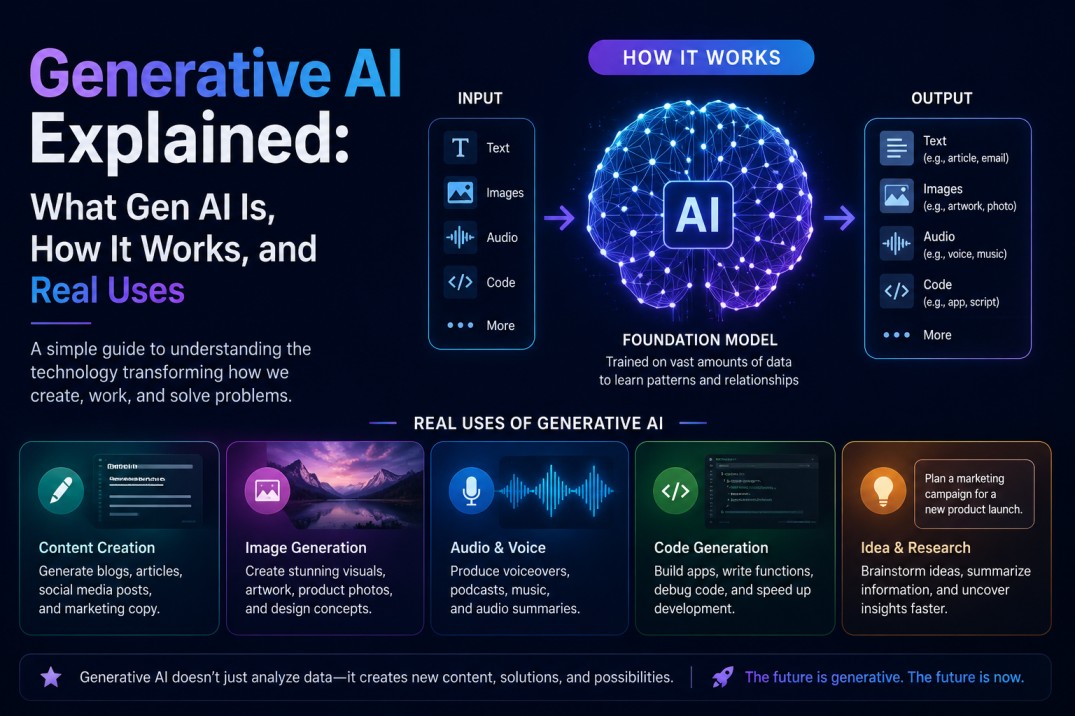
The rise of generative AI has completely reshaped how individuals and businesses approach creativity, automation, and productivity. Unlike traditional artificial intelligence systems that focus on analyzing or classifying data, generative AI is designed to create entirely new content. This can include text, images, audio, code, and even videos. Its ability to mimic human creativity and produce high-quality outputs has made it one of the most revolutionary technologies of the modern era.
The growing interest in gen AI—a popular variation people search for—has been fueled by the accessibility of tools like ChatGPT, Midjourney, and DALL·E. These platforms have made advanced AI capabilities available to everyday users without requiring deep technical knowledge. As a result, students, marketers, developers, and entrepreneurs are all leveraging generative AI to streamline their work and unlock new possibilities.
What makes generative AI stand out is its adaptability. It can write blog posts, generate realistic images, assist with coding, and even simulate conversations. This versatility has led to its rapid adoption across industries such as marketing, healthcare, education, and entertainment. The buzz around generative AI is not just hype—it reflects a genuine transformation in how we interact with technology.
How generative AI Works Using Machine Learning Models and Training Data
generative AI operates on advanced machine learning models, particularly deep learning systems like neural networks and transformers. These models are trained on massive datasets that include text, images, and other forms of content. By analyzing patterns within this data, the AI learns how to generate new content that closely resembles real-world examples.
One of the most important mechanisms behind generative AI is prediction. For example, when generating text, the model predicts the next word based on the context of the previous words. Over time, and with enough data, these predictions become highly accurate, resulting in natural and coherent outputs.
Training data plays a crucial role in determining the quality of the output. A well-trained model can produce high-quality and contextually relevant results, while poorly curated data can lead to errors or biased outputs. This is why companies invest heavily in refining and fine-tuning their AI models.
Fine-tuning is another important step where models are adjusted using specific datasets to perform better in targeted applications. For instance, a model trained for customer support will behave differently from one designed for creative writing. This flexibility allows generative AI to be used across a wide range of use cases.
Most Popular generative AI Tools for Text Image and Video Creation
The ecosystem of gen AI tools has expanded rapidly, offering solutions for almost every creative and professional need. For text generation, tools like ChatGPT and Jasper AI are widely used for writing blogs, emails, and marketing content.
In the field of image generation, platforms like Midjourney and Stable Diffusion allow users to create high-quality visuals simply by describing them in text prompts. These tools are especially popular among designers, marketers, and content creators.
Video creation is also evolving with tools like Runway ML, which enables users to generate and edit videos using AI-powered features. Similarly, platforms like Descript are revolutionizing audio and video editing by allowing users to edit content through simple text-based commands.
This growing AI tools list continues to expand, making it easier for users to find solutions tailored to their specific needs. Whether you are creating content, designing visuals, or editing videos, there is a generative AI tool available to help.
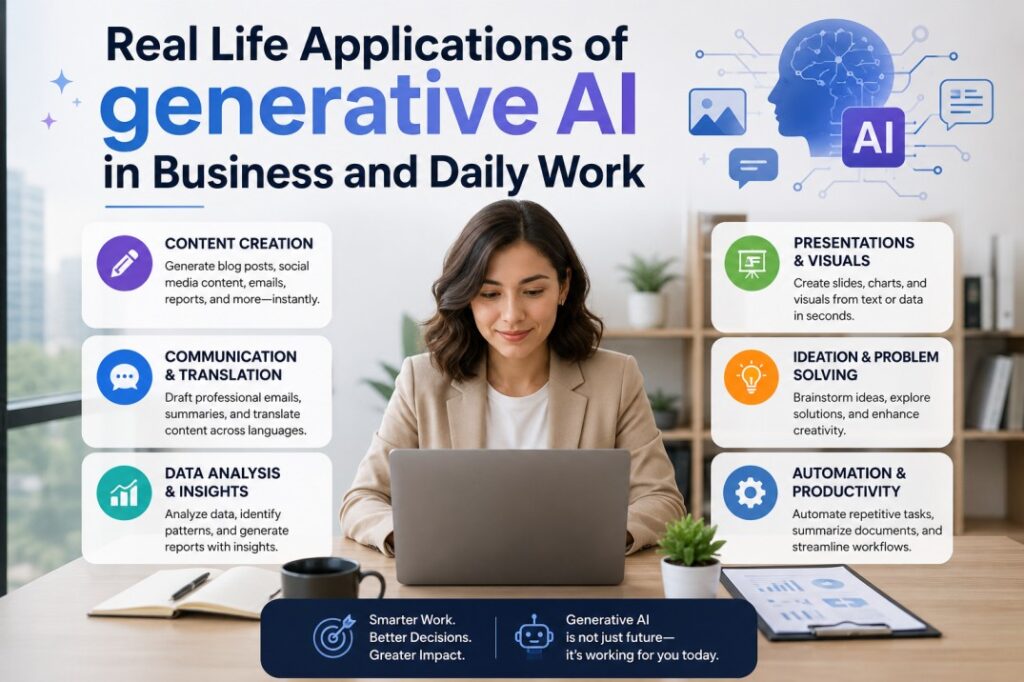
Real Life Applications of generative AI in Business and Daily Work
generative AI is not just a technological trend—it is a practical tool that is being used in real-world scenarios every day. In marketing, businesses use AI to generate ad copy, social media posts, and email campaigns. This significantly reduces the time and effort required to produce content.
Customer service is another area where generative AI is making a big impact. AI-powered chatbots can handle customer queries, provide support, and even resolve issues without human intervention. This improves efficiency and enhances customer satisfaction.
In education, generative AI helps create personalized learning materials, summaries, and explanations. Students can use it to better understand complex topics, while teachers can generate lesson plans and assessments more efficiently.
Even in daily life, individuals are using generative AI for tasks such as writing resumes, planning trips, and organizing schedules. Its ability to automate repetitive tasks makes it a valuable tool for both personal and professional use.
Benefits of Using generative AI Tools for Productivity and Automation
One of the biggest advantages of generative AI is its ability to boost productivity. By automating repetitive and time-consuming tasks, users can focus on more strategic and creative activities. This leads to better outcomes and more efficient workflows.
Another major benefit is scalability. Businesses can generate large volumes of content quickly, which is particularly useful in digital marketing and e-commerce. generative AI also ensures consistency in tone and style across different platforms.
Cost efficiency is another key advantage. Companies can reduce their reliance on large teams by using AI tools to handle tasks like writing, design, and data analysis. This makes generative AI especially beneficial for startups and small businesses.
Additionally, generative AI enhances creativity by providing new ideas and perspectives. It acts as a collaborative partner, helping users brainstorm and refine their concepts.
Limitations and Risks of generative AI You Should Know Before Using
Despite its many benefits, generative AI is not without its limitations. One of the primary concerns is accuracy. AI-generated content can sometimes include incorrect or misleading information, especially if the training data is flawed.
Bias is another issue that users need to be aware of. If the data used to train the AI contains biases, the output may reflect those biases. This can lead to unintended consequences in sensitive applications.
There are also ethical concerns related to copyright and originality. Since generative AI creates content based on existing data, questions arise about ownership and intellectual property.
Privacy and security risks are also important considerations. Users should avoid sharing sensitive or confidential information with AI tools to prevent potential misuse.
Understanding these risks is essential for using generative AI responsibly and effectively.
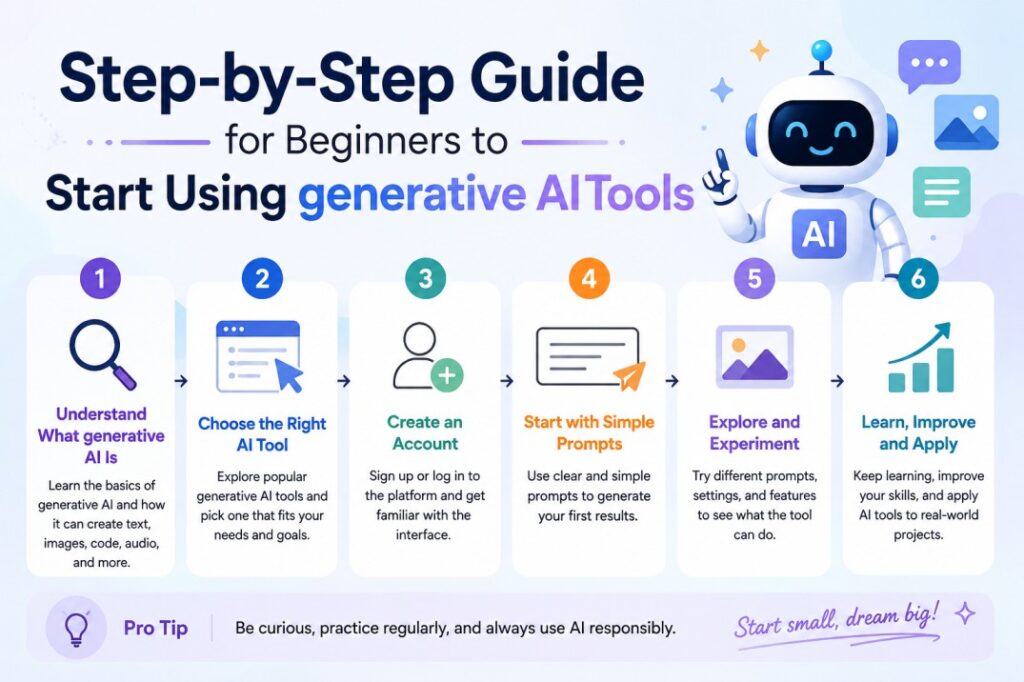
Step-by-Step Guide for Beginners to Start Using generative AI Tools
Getting started with generative AI is simple and accessible. The first step is to choose a tool that suits your needs. For beginners, text-based tools like ChatGPT are a great starting point.
Next, learn how to write effective prompts. The quality of the output depends heavily on how clearly and specifically you describe your requirements. A well-crafted prompt can significantly improve results.
Experimentation is key. Try different inputs, styles, and formats to understand how the AI responds. Over time, you will develop a better understanding of how to get the desired output.
It is also important to review and edit AI-generated content. While AI can produce high-quality results, human oversight ensures accuracy and relevance.
Finally, explore advanced features such as integrations and automation to maximize the benefits of generative AI tools.
Free vs Paid generative AI Tools Comparison with Key Differences
When choosing between free and paid generative AI tools, it is important to consider your specific needs. Free tools are ideal for beginners and casual users, offering basic features and limited usage.
Paid tools, on the other hand, provide advanced capabilities, higher usage limits, and better performance. They often include additional features such as team collaboration, customization, and priority support.
Another key difference is output quality. Paid tools typically deliver more refined and accurate results due to better models and infrastructure.
Ultimately, the choice depends on your goals. If you plan to use generative AI for professional purposes, investing in a paid tool may be worthwhile.
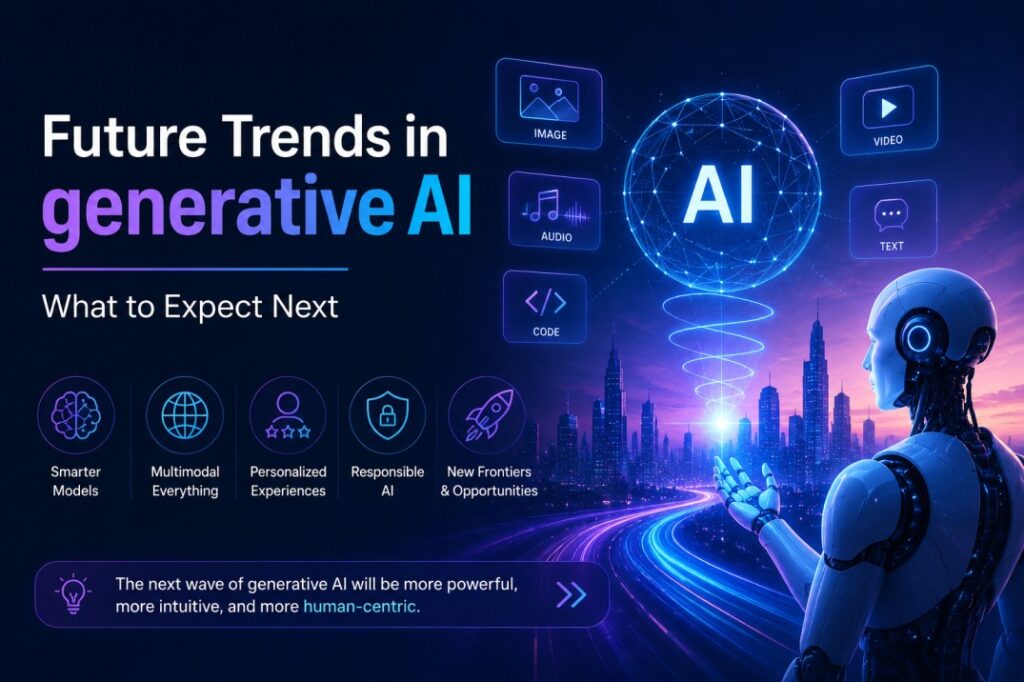
Future Trends in generative AI and What to Expect Next
The future of generative AI is full of exciting possibilities. One major trend is the integration of AI into everyday applications, making it more accessible and user-friendly.
Multimodal AI is another important development. This involves combining text, image, audio, and video capabilities into a single system, enabling more complex and versatile outputs.
Personalization will also play a key role in the future. AI systems will become better at understanding user preferences and delivering tailored experiences.
Additionally, improvements in ethical AI and regulatory frameworks are expected to address concerns related to bias, privacy, and security.
As technology continues to evolve, generative AI will play an even bigger role in shaping the future of work and innovation.
Frequently Asked Questions About generative AI and Its Uses
Many people are curious about generative AI and how it works. One common question is whether it can replace human jobs. While it can automate certain tasks, it is more likely to enhance human capabilities rather than replace them entirely.
Another frequently asked question is about accuracy. generative AI can produce impressive results, but it is not perfect and requires human review.
People also ask about accessibility. The good news is that many generative AI tools are available to the public, making it easy to get started.
Finally, concerns about ethics and privacy are common. Understanding how generative AI works and using it responsibly can help address these concerns.
Conclusion
generative AI is transforming the way we create, work, and communicate. Its ability to generate content, automate tasks, and enhance productivity makes it a powerful tool for individuals and businesses alike. While it comes with certain risks and limitations, responsible use can unlock immense potential. As generative AI continues to evolve, it will play a crucial role in shaping the future of technology and innovation.